Hairstyles That Last All Day: 8 Styles and the Prep That Helps
Hairstyles that last all day are rarely a matter of luck. A ponytail that has slid to your neck by lunch usually has a mechanical reason: the hair was too slick to grip, the elastic was carrying more weight than it could hold, or the air outside undid a style that was set indoors. Once you know which one is happening, the fix is usually small.
This guide covers eight styles that tend to hold well, the prep that improves their staying power, how hair type and weather change the result, and what to do when a style starts to fall apart. It also covers something many guides skip: how to get a firm hold without pulling your hair too tight. No style comes with a guaranteed number of hours, so read everything here as a way to improve your odds.
What Makes Hairstyles That Last All Day Actually Last?
Three things decide how long a style holds: grip, anchor, and weather.
Grip is friction. Very clean, silky hair gives elastics and pins little to hold onto, so they slide. Hair with some texture holds them better.
Anchor is how the style is secured and where its weight sits. A heavy ponytail pulling on one thin elastic will drift down. A bun supported by two crossed pins at the nape has a base to rest on.
Weather matters because of how styled hair is held in shape. Hair behavior is commonly attributed to hydrogen, disulfide, and ionic bonds, and a 2024 review in the International Journal of Cosmetic Science describes hydrogen bonds as the most numerous of these in the hair fiber. Water reaches those bonds. That is why a shape set with water and heat can loosen when the air turns humid.
You cannot change the weather, but you can choose a style and a hold that suit it. The rest of this guide is built around those three levers.
Which Styles Hold Best? A Quick Comparison
If you want a fast answer, start here. The ratings are editorial judgments based on common stylist guidance, not lab results, and they assume hair that is secured firmly but not tightly.
| Style | Tends to hold best on | Common weak point | Tension to watch |
|---|---|---|---|
| Low bun | Medium to long hair | Slips on fine, slick hair | Low if worn loosely |
| Low ponytail with wrapped base | Most hair types | Fine hair slides through the elastic | Rises if pulled snug at the hairline |
| Braided ponytail | Medium to long hair | Loose braid ends | Moderate |
| Single French or Dutch braid | Most lengths past the chin | Pulls at the front | Higher at the hairline |
| Claw-clip twist | Medium to thick hair | Fine hair slips out of the clip | Low to moderate |
| Half-up with a pinned base | Most hair types | Roots flatten by afternoon | Low |
| Pinned styles for short hair | Chin-length and shorter | Pins loosen on silky hair | Low |
| Heat-set waves, hair down | Hair with some texture | Humidity, brushing | None from the style itself |
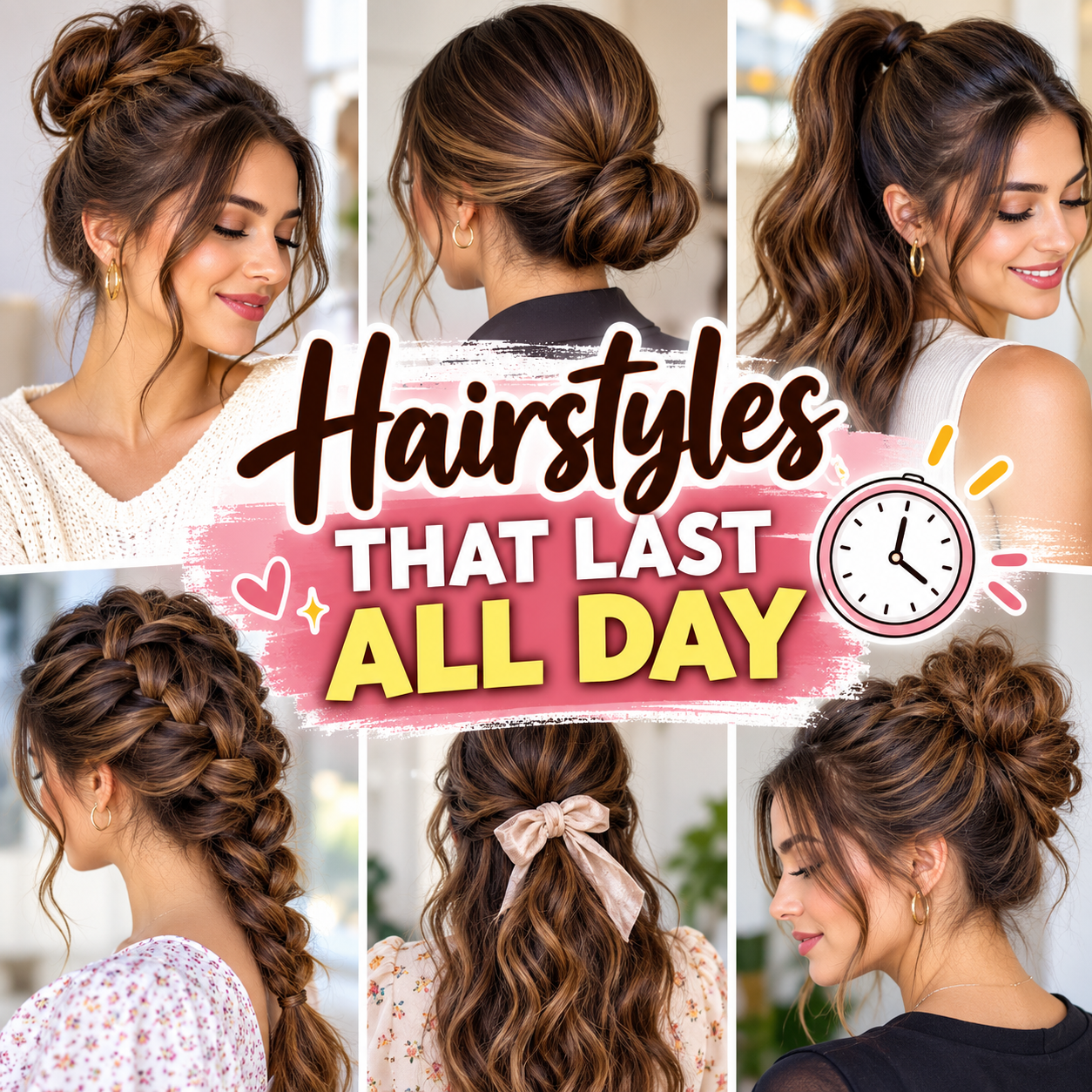
8 Hairstyles That Hold Up All Day
1. Low Bun (Twisted or Knotted)
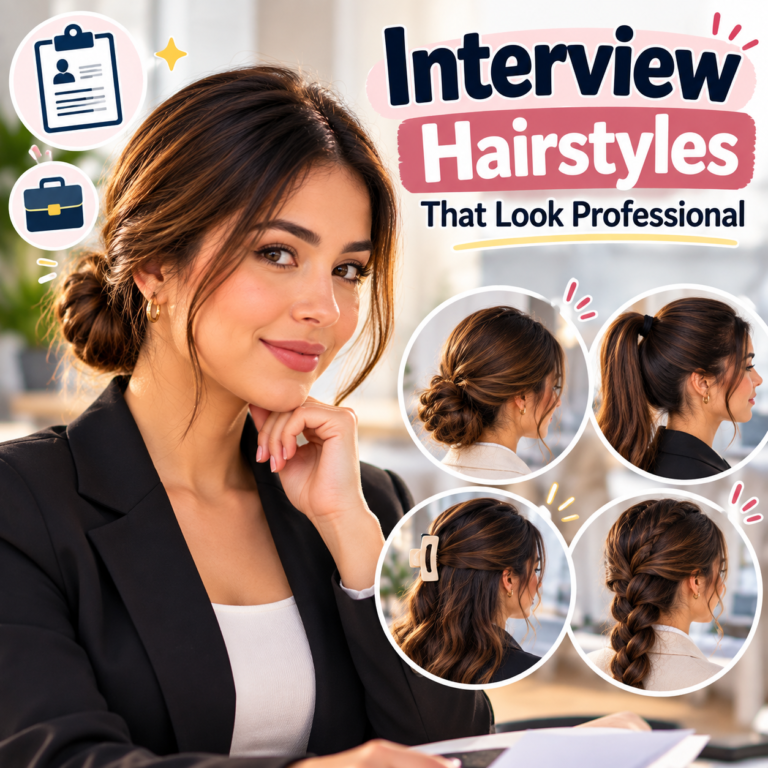
A low bun sits at the nape, where the weight of the hair rests on the base of the skull instead of hanging from a single point. That placement is a big part of why it tends to stay put through a long day of sitting, walking, and bag straps.
To secure it, twist the hair into a coil, wrap it around its base, and push two pins in so they cross. If you have flyaways at the crown, a little styling cream on your palms smooths them without stiffening the hair. Fine, slippery hair is the usual trouble spot, so give it texture before you twist (see the prep section below).
2. Low Ponytail With a Wrapped Base
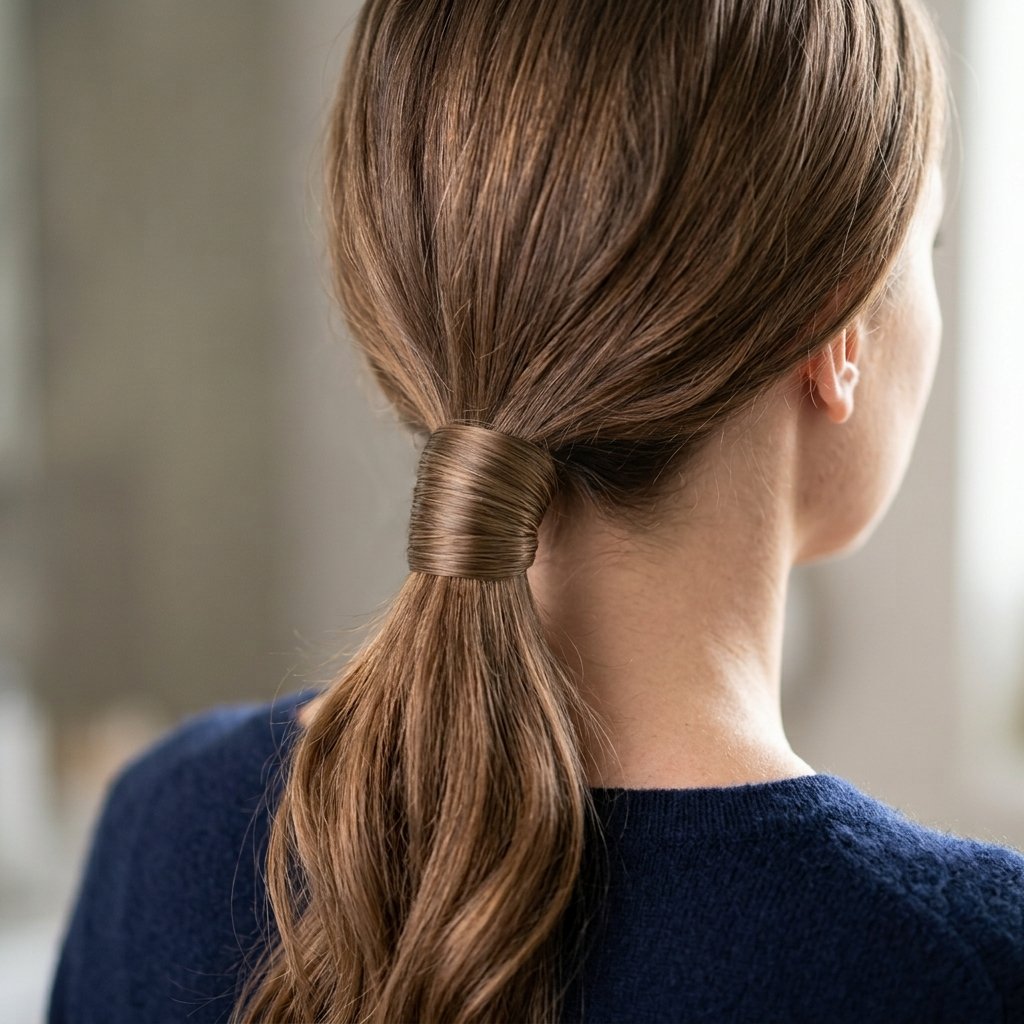
Take a thin strand from the underside of the tail, wrap it around the elastic, and pin the end under the wrap. The wrap hides the elastic and adds a second layer of friction against it.
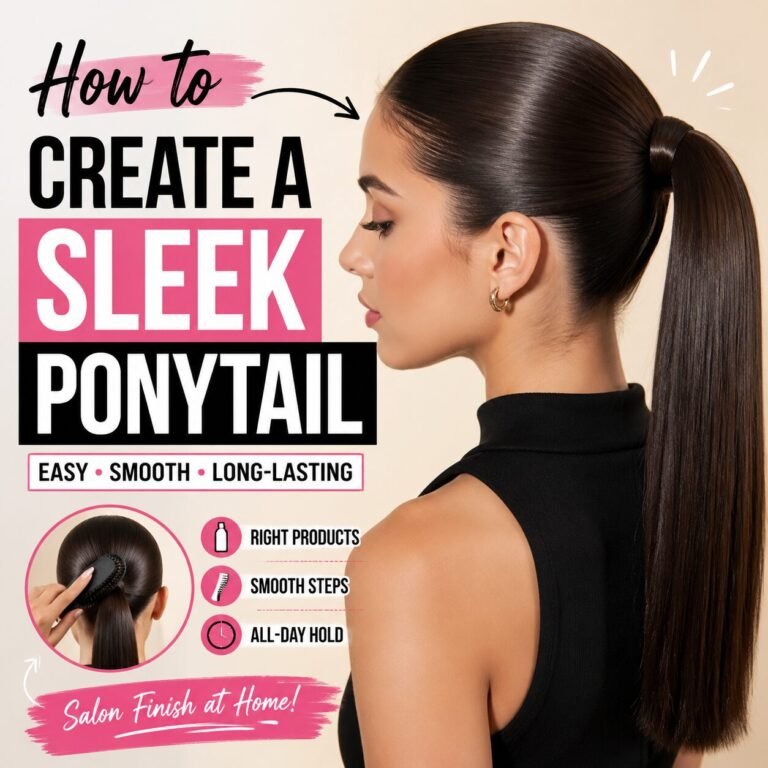
A low placement also helps if your hair has short layers, because layered ends tend to escape upward out of a high band and loosen the tail from the inside. If you want a smooth, polished finish, the steps in our guide on how to create a sleek ponytail cover the brushing and smoothing in detail.
3. Braided Ponytail
Braiding the length of a ponytail turns loose hair into one structure, so the ends cannot spread, tangle, or whip around in wind. It works well on medium to long hair, and the braid’s texture helps hide slightly oily roots.
Finish the braid with a small elastic and slip a pin through the end if it tends to unravel. Keep the braid snug enough to hold, but not so tight that the ponytail base pulls at your scalp.
4. Single French or Dutch Braid
A braid that runs back from the hairline keeps hair off your face and holds well on second-day hair, since a little natural oil gives the strands grip. The trade-off is that the first few sections sit right at the hairline, which is where tension builds up. Braid those sections more loosely than the rest. The comfort section near the end explains why that matters.
5. Claw-Clip Twist
Twist your hair upward and fasten it with a large claw clip. Many people find it comfortable because the clip spreads pressure across a wider area instead of pinching one spot the way an elastic can. It is also quick.
It works best on medium to thick hair. If your hair is fine, a standard clip may slide out. Try a smaller clip, or push a pin through the twist for backup. Claw clips are popular right now, but the reason to choose one is the hold, not the trend.
6. Half-Up With a Pinned Base
Instead of an elastic, gather the top section and fix it with two bobby pins crossed in an X. That gives you a secure base without a ponytail’s pull. It is a good option on second-day hair, and it covers roots that have lost lift.
7. Pinned Styles for Short Hair
Hair that is chin length or shorter rarely reaches a ponytail, so pins and clips do the work. Pin back front sections, make a small half-up, or use a headband that fits snugly against the scalp. Matte pins, or pins lightly misted with hairspray until slightly tacky, tend to grip fine hair better than smooth ones. This is common stylist practice rather than tested fact, but it is easy to try.
8. Heat-Set Waves or Curls, Hair Down
If you mean “hair down” when you search for long-lasting hairstyles, the rules are different. Curls and waves hold best when the hair is fully dry before you start, when you work in small sections, and when each curl cools completely before you touch it. Clipping curls up while they cool is a common stylist technique for this.
Once the style is set, resist brushing it out. Loosen it with your fingers and finish with a light mist of hairspray.
Prep That Helps Any Style Hold
Preparation does more for staying power than any single hairstyle. These steps apply across the styles above.
Start With Grip, Not Squeaky-Clean Hair
Many stylists prefer to build updos and curls on second-day hair, because natural oils add a bit of grip. If your hair is freshly washed, you can recreate that grip with a light texturizing spray or a little dry shampoo worked through the area where an elastic or pin will sit.
This depends on your scalp. If your roots get oily quickly, dry shampoo at the roots before styling can keep them from looking limp, and a very oily day may call for a fresh wash.
Match the Product to the Job
It helps to know what each product type actually does:
- Mousse adds body, especially before blow-drying.
- Texturizing spray adds grip, but it does not hold a shape by itself.
- Styling cream or gel smooths flyaways and baby hairs.
- Hairspray provides the final hold.
Because texture products and hold products do different jobs, the most reliable routine usually combines one of each: texture first, then a light finishing spray. Heavy layers of product tend to weigh fine hair down, so start small.
Choose Elastics, Pins, and Clips That Fit Your Hair
The elastic should match your hair’s thickness. A thin, soft elastic suits fine hair. Thick hair usually needs a sturdier band or two.
For pins, many stylists recommend placing the ridged (wavy) side against the scalp, because the ridges grip hair better than the smooth side. A single pin often slips, so cross two pins in an X. Bending a pin slightly to follow the curve of your head helps it lie flat and catch the right amount of hair.
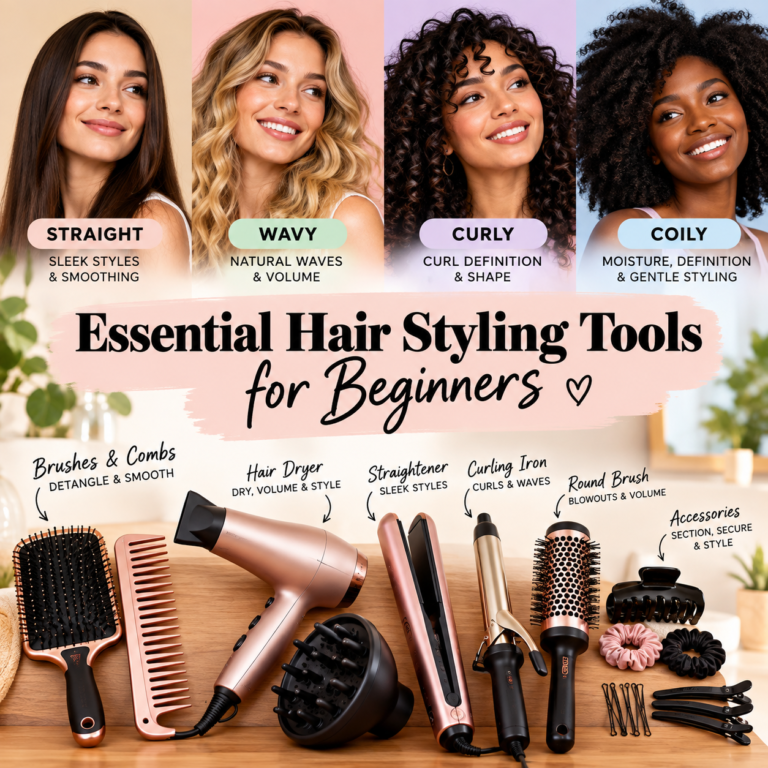
Heat-Styling Basics
Dry hair completely before using hot tools, and use a heat protectant. Damp hair under high heat is a common cause of damage. Lower temperatures and shorter passes protect hair better than repeated hot passes.
Choose by Hair Type and Length
The same style can behave very differently on different hair. Use this as a starting point and adjust to what you see.
Fine or Straight Hair
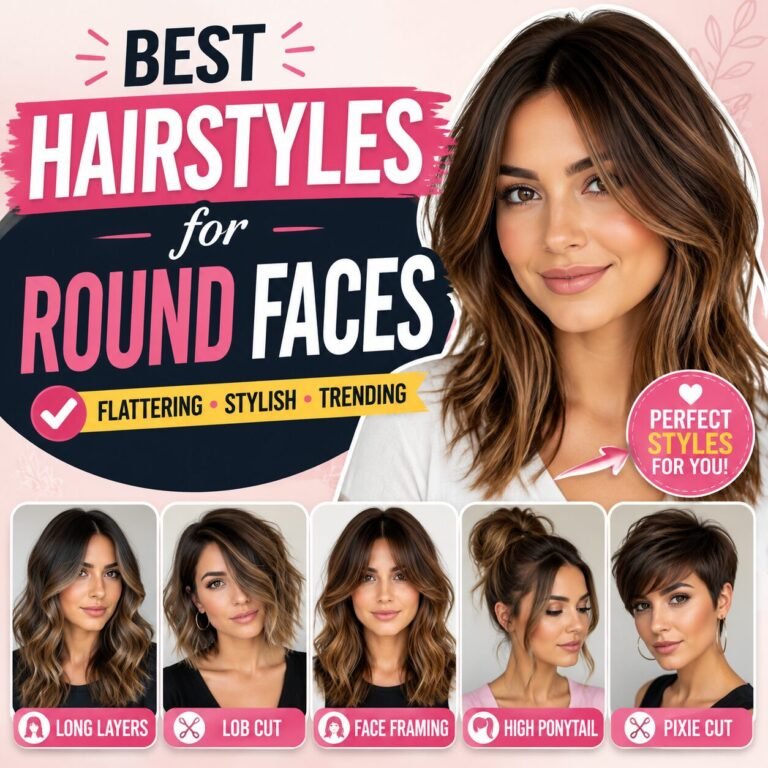
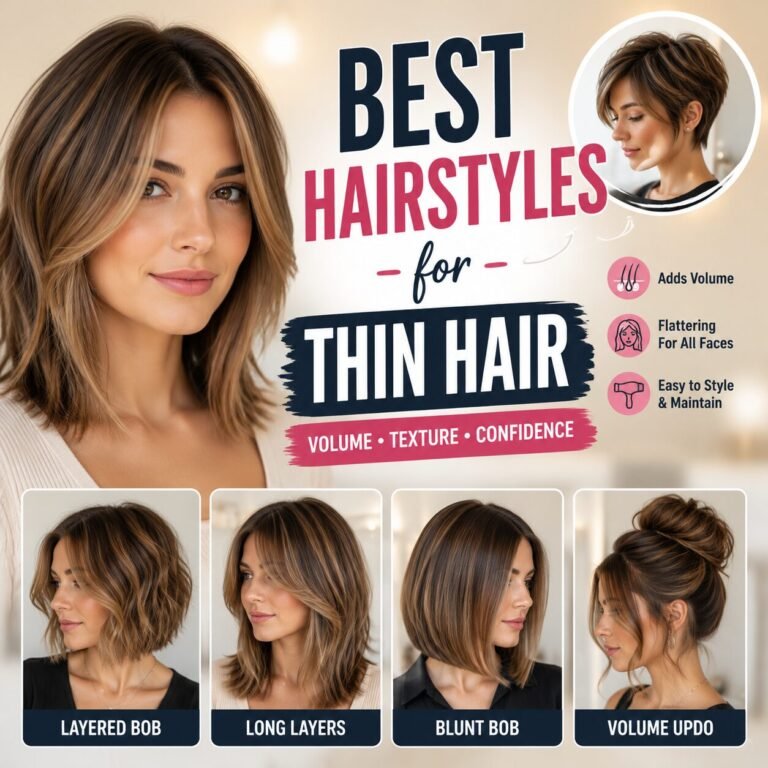
Slipping is the main problem. Add texture before tying, use one thin elastic rather than two, and anchor the style with a pin. A second elastic can create a visible pinch on fine hair that was never heavy enough to need it. If your hair is also thin, our guide to hairstyles for thin hair covers ways to add body that also help styles stay put.
Thick Hair
Weight is the problem. Use a stronger elastic (or two), divide the hair into sections so the load is shared, and place the style lower so the base can carry it. Add more pins instead of one large one.
Wavy and Curly Hair
Natural texture already gives you grip, which is an advantage. The risk is frizz when humidity rises. Smooth gently, avoid brushing out set curls, and refresh with a light mist and a small amount of product instead of heavy layers.
Coily Hair and Protective Styles
Braids and twists can last far longer than a day, which makes them a different goal from “lasting all day.” Dermatologists advise that braids, cornrows, and weaves should not be too tight, and that pain during styling is a sign to stop and redo them. The same American Academy of Dermatology (AAD) guidance on pulling styles, covered below, sets a limit of 6 to 8 weeks for braids.
Short and Medium Hair
Pins, half-up styles, and headbands do what elastics cannot. Medium hair has the most options, since it can reach a low bun or short braid but is light enough that a single clip often holds.
Humidity, Heat, Wind, and Rain
Humidity
As described earlier, water interacts with the hydrogen bonds that help hold a styled shape. Hair also takes up more moisture as the air gets more humid, which is why frizz and loosening show up on damp days. Hair that has been bleached or heavily heat-styled tends to absorb moisture more readily, so it can frizz faster.
Practical choices that tend to help: braids, low buns, and smooth low ponytails, which keep hair controlled and off the skin. A light humidity-resistant finishing spray can add staying power. It can also help to know that a style set in a steamy bathroom may shift once you step into drier air, so let hair cool and settle before leaving.
Heat and Sweat
Hot days call for styles that keep hair off your neck. Secure, but do not pull tight. Dry shampoo at the roots can absorb oil before it makes hair limp.
Wind and Rain
Low, anchored styles and braids fare better than loose hair. If you wear a hood, scarf, or hat, put it on over hair that is pulled back loosely. The AAD notes that silk or satin coverings are gentler on hair than other fabrics. Evidence on wind and rain specifically is thin, so treat this as practical advice, not research-backed rules.
Pick the Right Style for Your Day
| Your day | Styles worth trying | Why |
|---|---|---|
| Office or work | Low bun, low ponytail with a wrapped base | Neat, secure, easy to keep tidy |
| School or college | Braided ponytail, claw-clip twist | Comfortable through classes and bag straps |
| A rushed morning | Claw-clip twist, half-up with pins | Fast to make, forgiving if imperfect |
| Light exercise | Braided ponytail, single braid | Keeps hair controlled during movement |
| Travel or a long day outside | Low bun, single braid | Anchored, handles hats and wind |
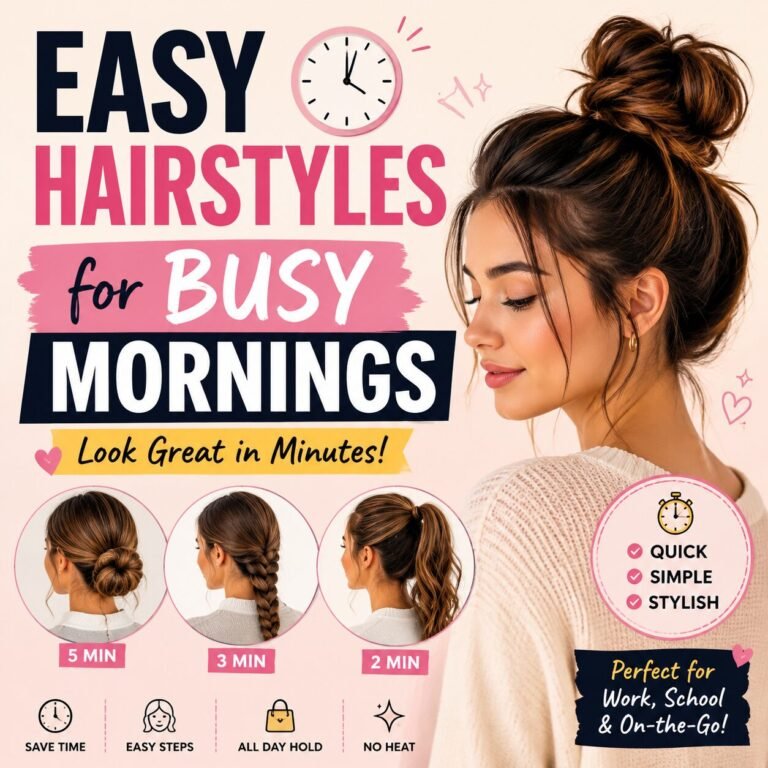
For more quick options when time is short, see these easy hairstyles for busy mornings.
Why Your Hairstyle Falls Apart (and the Fix)
Most failures trace back to one of a few causes. Find your symptom below.
| What happens | Likely cause | What to try |
|---|---|---|
| Ponytail slides down | Hair too slick, or elastic stretched out | Add texture before tying, replace old elastics, anchor with a pin |
| Pins slip out | Smooth side down, single pin, slippery hair | Ridged side toward the scalp, cross two pins, add texture first |
| Roots go flat | Oil build-up or no lift at the start | Dry shampoo at the roots, lean forward and mist the roots |
| Frizz returns by afternoon | Humidity, or styling on damp hair | Smooth with a little product, finish lightly, choose a lower style |
| Curls drop | Set while warm, or brushed out | Cool each curl before releasing, loosen with fingers |
| Braid unravels | Loose end | Small elastic plus a pin at the tip |
| Bun loosens | Not enough anchor | Add a second crossed pin pair at the base |
How to Refresh a Hairstyle Midday
A style that has started to droop is often easy to save without restarting.
- Mist lightly with water. It can reactivate styling product and make hair pliable again.
- Add dry shampoo at the roots if they look flat or oily.
- Smooth flyaways. Spray a little hairspray onto your hands and run them over the hair, instead of spraying the hair directly.
- Lift the roots. Lean forward, mist the roots lightly, and massage them.
- Re-pin. Slip in fresh pins where the style has loosened, ridged side toward the scalp.
A small kit makes this easy: a few pins, a spare elastic, and a travel dry shampoo.
Keep It Comfortable: Hold Without Pulling Too Tight
A style that stays all day should not hurt all day. Tension is the one area where “lasts longer” can quietly become “pulls harder,” and it is worth being careful.
The AAD explains that tight ponytails, buns, braids, and updos can cause traction alopecia, a form of hair loss from repeated pulling. The risk comes from styles that are too tight or worn tightly often. It does not mean a ponytail is off-limits. Dermatologist guidance includes:
- Avoid wearing hairstyles that pull on your hair frequently.
- Loosen styles, especially around the hairline.
- Switch styles regularly so your hair can recover.
- Wear braids for no longer than 6 to 8 weeks.
- Treat pain as a sign that a style is too tight.
Also watch for stinging, crusts on the scalp, sections of scalp pulled up like a tent, broken hairs at the forehead, or a receding hairline. If you notice any of these, change your style and consider seeing a board-certified dermatologist. This guide is general information and cannot diagnose a scalp or hair problem.
You can protect hold without adding tension. Place styles lower, use pins or a claw clip instead of one very tight elastic, and braid the front sections more loosely than the rest.
Frequently Asked Questions
How do I make my hairstyle last all day?
Build grip before you style, choose a low, well-anchored style, secure it with pins or a fitted elastic, and finish with a light hold product. Keep a few pins and a small dry shampoo for a midday refresh. Results vary with hair type and weather.
What hairstyle lasts the longest?
No single style wins for everyone. Low buns and braids tend to hold well because the weight is supported and the hair is contained, but hair type and weather matter a lot. Avoid trusting any promise of a fixed number of hours.
Does second-day hair hold a style better?
Often, yes. Natural oils add grip that freshly washed hair lacks. If your roots get oily quickly, dry shampoo can help, and on very oily days a fresh wash may work better.
How do I keep a ponytail from slipping?
Add texture before you tie it, use an elastic that fits your hair thickness, and anchor the base with a pin. Heavy hair may need two elastics. Fine hair usually does better with one thin elastic and a pin.
How can I make a hairstyle last without hairspray?
Start with second-day or textured hair, use pins and clips, choose braids or twists, and let heat-set curls cool fully before you release them. The hold will usually be lighter than with spray, so expect to touch it up.
Is a tight ponytail every day bad for your hair?
Dermatologists warn that pulling styles worn often or too tightly can lead to traction alopecia. Wear them looser, vary your styles, and stop if it hurts. If you notice hair loss or scalp symptoms, see a board-certified dermatologist.
The Short Version
- Grip: a little texture helps elastics and pins hold.
- Anchor: low, supported styles with crossed pins tend to hold best.
- Weather: humidity loosens set shapes, so braids and low styles are safer bets.
- Comfort: hold should never come from pulling hard.
- Refresh: water mist, dry shampoo, and a few fresh pins can rescue a drooping style.