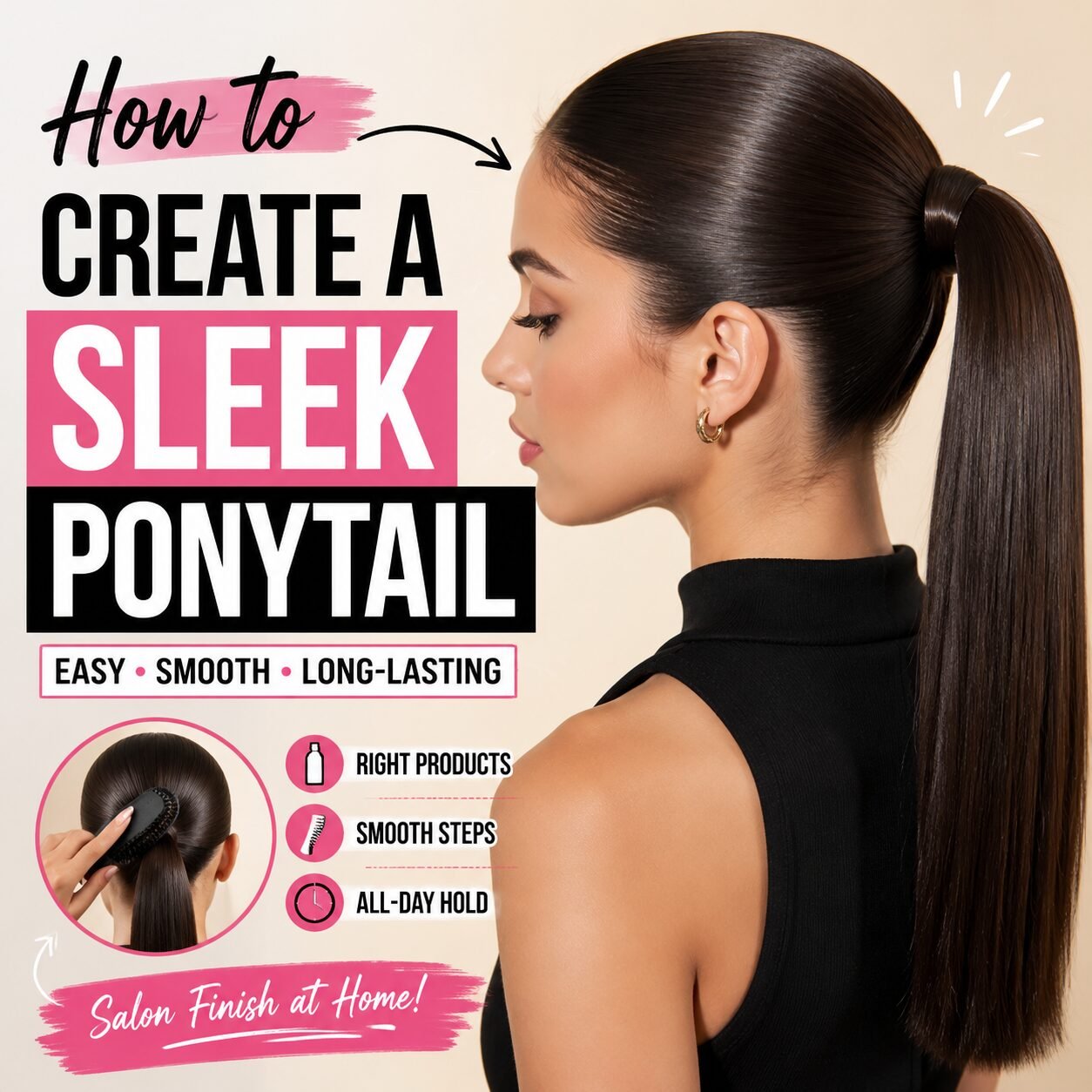
How to Create a Sleek Ponytail: A Step-by-Step Guide for Every Hair Type
A sleek ponytail looks effortless, but if you’ve ever tried to recreate one at home, you know the truth: it takes the right order of steps, not just a hair tie and a prayer. Learning how to create a sleek ponytail really comes down to prepping your hair correctly, choosing the right tools, and adapting your technique to your hair type — whether that’s fine, thick, curly, or coily.
In this guide, you’ll learn the exact steps to get a smooth, polished ponytail, how to adjust the method for your specific hair type, how to stop flyaways before they start, and how to keep the whole look intact from your morning coffee to your evening plans.
What Makes a Ponytail “Sleek”?
Not every ponytail is a sleek ponytail. A basic ponytail just gathers hair and secures it. A sleek ponytail goes a step further — the roots lie flat against the scalp, there are no visible bumps or lumps along the way to the elastic, flyaways are controlled, and the hair has a smooth, glossy finish rather than looking dry or overly stiff.
The difference between “neat” and “sleek” usually comes down to three things: how well the hair was smoothed before it went up, how much tension was used while gathering it, and how the elastic itself is disguised.
Tools & Products You’ll Need
Before you start, gather what you need. Having the right tools on hand makes the difference between fighting your hair for twenty minutes and finishing in five.
Brushes
A boar-bristle brush is the classic choice for a slicked-back look because the natural bristles distribute your scalp’s oils through the hair, which helps smooth the surface and add shine. A paddle brush works well for blow-drying hair flat before you gather it, and a fine-tooth or rat-tail comb is useful for smoothing tiny sections and creating a crisp part.
Hold Products
- Gel or pomade — smooths the surface and keeps flyaways down without much added weight
- Edge control — best for taming baby hairs along the hairline
- Mousse — adds light hold and a bit of volume at the same time, useful if your hair tends to fall flat
Heat Protectant
If you plan to blow-dry or straighten your hair before styling, a heat protectant spray is non-negotiable. It creates a barrier between the hair shaft and the heat tool, which helps prevent the dryness and roughness that make hair harder to smooth in the first place.
Finishing Products
An anti-frizz serum or a lightweight shine spray applied at the end gives the ponytail that glassy, polished look. A flexible-hold hairspray locks everything in place without leaving the hair stiff or crunchy.
Elastics
Choose a snag-free elastic or a hair bungee for the most secure hold. If your scalp is sensitive or you style your hair up often, a silk or satin scrunchie causes less friction and puts less strain on the hair shaft than a traditional elastic.
Quick Tip: Keep two elastics on hand — one for the main ponytail and a slightly thinner one to wrap around the base for extra security.
How to Create a Sleek Ponytail: Step-by-Step
Once your tools are ready, follow these steps in order. This method works as your base technique — the hair-type adjustments further down will tell you exactly where to tweak it.
- Detangle your hair first. Starting with knots or tangles is the number one reason ponytails end up bumpy. Use a wide-tooth comb and work from the ends up toward the roots.
- Apply a heat protectant or smoothing product to damp hair if you’re using heat tools, focusing on the mid-lengths and ends.
- Blow-dry or straighten your hair smooth. Point the blow-dryer nozzle downward along the hair shaft to close the cuticle and reduce frizz. If you’re skipping heat, see the no-heat method in the hair-type section below.
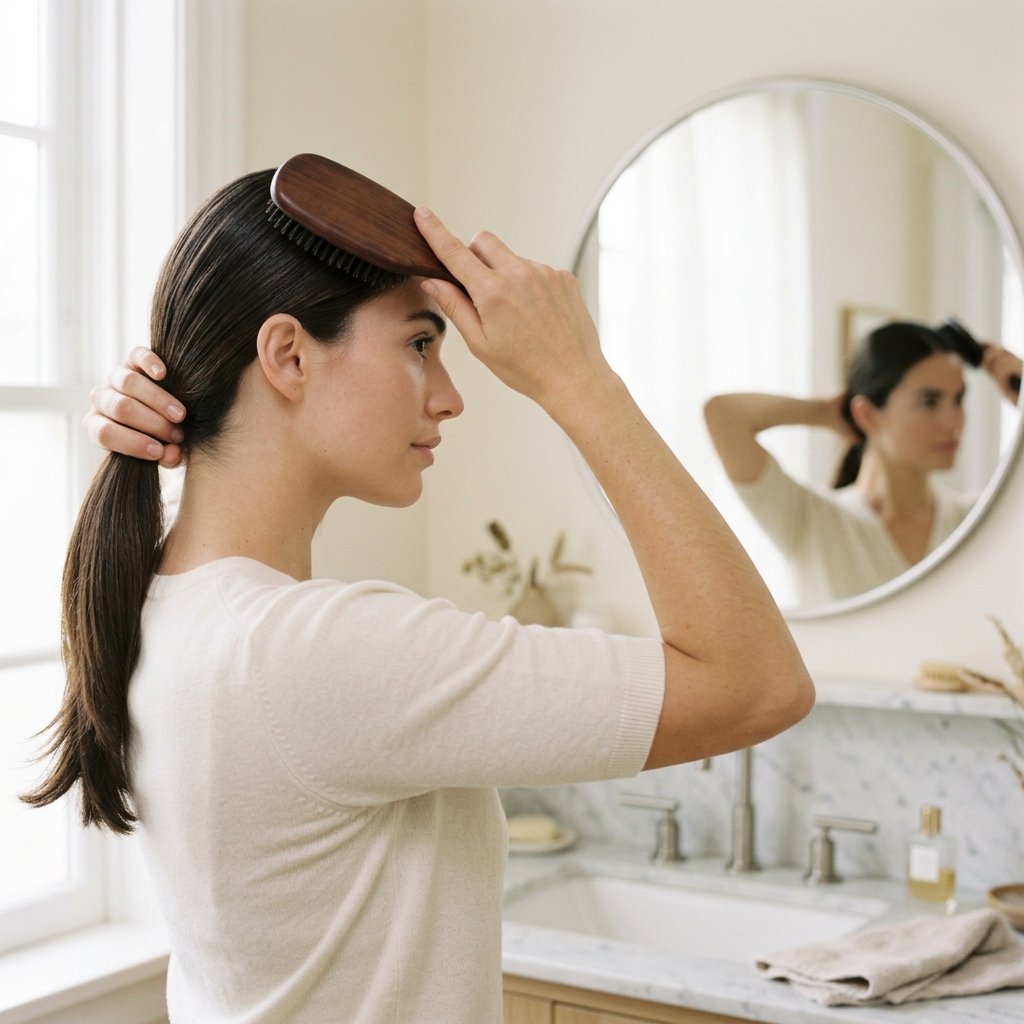
- Decide on placement — high, mid, or low — and brush your hair straight back toward that point, keeping steady tension as you go.
- Secure the ponytail with your elastic. Wrap it enough times to feel secure, but stop before you feel your scalp pulling uncomfortably.
- Smooth out any remaining bumps with your brush or comb, and touch up flyaways with a small amount of gel or pomade on your fingertips.
- Wrap a thin strand of hair around the elastic to hide it completely, and pin the end underneath with a bobby pin.
- Finish with a light mist of shine spray or flexible-hold hairspray, held about 10–12 inches away from your head so it doesn’t leave a wet or heavy look.
That’s the full process from start to finish. From here, your hair type determines how much you’ll lean on heat, product, or technique to get the same smooth result.
How to Get a Sleek Ponytail for Your Hair Type
The base technique above works for everyone, but the details change depending on what you’re starting with.
Straight Hair
Straight hair is the easiest starting point for a sleek ponytail because it’s already smooth. Focus your effort on shine and static control rather than fighting texture — a lightweight serum and a boar-bristle brush are usually all you need.
Curly or Coily Hair
You don’t need heat to get a sleek ponytail with curly or coily hair, though you can use it if you prefer a fully straight finish. For a no-heat version, apply a curl-defining cream or gel to soaking-wet hair, then smooth it back into your ponytail while it’s still wet, using a brush to lay the edges flat. As it dries, the gel sets, giving you a smooth, “laid” look without heat damage. Try to avoid restyling or touching it too much while it dries, since curly and coily hair is more prone to frizz from over-manipulation.
Fine or Thin Hair
Fine hair can look flat once it’s pulled back, so build in volume before you secure the ponytail. Apply a texturizing spray or dry shampoo at the roots and gently tease the crown with a fine-tooth comb before gathering your hair. Choose a thinner elastic so it doesn’t overwhelm the ponytail, and go easy on heavy products, which can weigh fine hair down and undo your volume work.
Thick Hair
Thick hair holds a sleek shape well, but it can be harder to smooth all the way through in one pass. Work in two or three sections rather than trying to brush everything back at once, and use a stronger-hold elastic that can handle the extra weight without slipping.
Short Hair
A short ponytail — sometimes called a “pineapple” ponytail — is absolutely achievable. Use a small amount of gel along the hairline to smooth flyaways and shorter layers, and don’t be afraid to use a few bobby pins to hold in pieces that are too short to fully reach the elastic.
Natural or 4C-Type Hair
For natural, tightly coiled hair, start on wet or damp hair with a gel that offers strong hold and stretch, and smooth your edges with a soft brush. Wrapping your hairline with a satin scarf while the gel sets — known as “laying your edges” — helps lock in a smooth finish once you take it down. Be gentle around the hairline specifically, since repeated tension in that area over time can weaken the hair there.
High vs. Low vs. Mid Ponytail: Which Suits You?
| Placement | Best For | Effect |
|---|---|---|
| High Ponytail | Round or oval face shapes, workouts, statement looks | Lifts the face, adds height, feels energetic |
| Mid Ponytail | Most face shapes, everyday wear | Balanced, versatile, works for both casual and polished looks |
| Low Ponytail | Oblong or square face shapes, formal or office settings | Elongates the neckline, reads as understated and elegant |
There’s no strict rule here — placement is partly about face shape and partly about the occasion. A high pony feels more energetic and youthful, while a low pony tends to look more refined and grown-up.
How to Prevent Frizz and Flyaways
Frizz is usually a sign that the hair’s outer cuticle isn’t lying flat, and humidity makes that worse by causing the hair to absorb moisture unevenly. A few habits make a real difference:
- Apply products in the right order: heat protectant first, smoothing product second, finishing spray last.
- On humid or rainy days, go with a low, secured ponytail rather than an updo with more exposed layers.
- Sleep with your hair loosely wrapped in a silk or satin scarf, or on a silk pillowcase, to reduce overnight friction and frizz.
- Avoid overbrushing dry hair, which can rough up the cuticle and create static.
How to Make a Sleek Ponytail Last All Day
A sleek ponytail should hold up through a full workday or a workout, not just for the first hour. Keep a small touch-up kit with you — a travel-size hairspray, a small comb, and a couple of bobby pins covers almost everything.
If you’re heading to the gym, pull the ponytail slightly tighter than usual and consider a headband along the hairline to catch sweat before it disturbs your style. To refresh a ponytail later in the day without redoing it completely, smooth the surface with a small amount of dry shampoo or a touch of gel on your fingertips, then re-secure the elastic if it’s loosened.
Common Mistakes to Avoid
Common Mistake: Pulling the ponytail too tight. It might look sleeker in the first ten minutes, but excess tension can cause discomfort and, over time, stress on the hairline. Snug is enough — you shouldn’t feel your scalp straining.
Other mistakes to watch for:
- Skipping the heat protectant before blow-drying or straightening, which leaves hair rougher and harder to smooth.
- Using the wrong brush for your hair type — a boar-bristle brush won’t do much for thick, curly hair, and a wide paddle brush can create more frizz on fine hair.
- Overloading on product. More gel or hairspray doesn’t equal more sleekness — past a certain point, it just looks stiff or greasy.
- Ignoring hairline prep. The one-to-two inches around your hairline show the most bumps and flyaways, so give that area extra attention with a comb or a small amount of edge control.
Is a Tight Ponytail Bad for You? (Scalp & Hairline Care)
A ponytail pulled too tight can cause what’s known as an external compression headache — tension around the hairline and scalp that triggers discomfort in the sensitive nerves under the skin, even though there are no nerve endings in the hair itself. If you regularly feel a dull ache after wearing a tight ponytail, that’s your sign to loosen up, according to health information from the Cleveland Clinic.
Wearing very tight ponytails frequently, especially at the same point on your hairline, can also contribute to gradual thinning or breakage in that area over time. The fix is simple: alternate your ponytail placement, use gentler elastics like silk scrunchies, and don’t feel like every ponytail has to be pulled to its absolute tightest to count as sleek.
Hairstyles That Pair Well With a Sleek Ponytail
A sleek ponytail is a strong base for other looks, not just a finished style on its own. A few ways to build on it:
- Wrap the ponytail itself into a low bun for a more formal finish.
- Add a braid — a French braid, fishtail, or simple three-strand — for texture without losing the sleek base.
- Leave two face-framing pieces out for a softer, less severe look.
- Pair a high sleek ponytail with a turtleneck or off-the-shoulder top for an editorial, put-together feel.
Frequently Asked Questions
How do I keep my ponytail sleek all day?
Set it with a flexible-hold hairspray, keep a small comb and bobby pins on hand for touch-ups, and avoid touching your hair too much throughout the day, since friction from your hands is one of the biggest causes of new flyaways.
Can I get a sleek ponytail without heat?
Yes. Apply a strong-hold gel or cream to wet hair, smooth it back firmly with a brush, and let it air-dry or dry under a satin scarf. This works especially well for curly, coily, and natural hair types.
Why does my ponytail always get flyaways?
Flyaways usually come from unsealed cuticles, static, or humidity. Using a heat protectant before drying, finishing with an anti-frizz serum, and avoiding overbrushing dry hair all help reduce them.
Is a sleek ponytail bad for my hairline or edges?
It can be if it’s worn too tight, too often, in the exact same spot. Rotate your ponytail’s placement and choose gentler elastics to protect your hairline over time.
How do I make a thin ponytail look thicker?
Tease the roots lightly before securing your hair, use a texturizing spray for grip, and consider splitting your hair into two ponytails stacked on top of each other with a smaller elastic for extra volume.
What’s the best elastic for a sleek ponytail?
A snag-free elastic or hair bungee gives the most secure hold for a fully slicked-back look. If you have a sensitive scalp or fine hair, a silk or satin scrunchie is gentler and still holds well.
Conclusion
A sleek ponytail isn’t about having “the right” hair type — it’s about prepping your hair properly, using products that suit your texture, and applying just enough tension to look polished without overdoing it. Once you’ve got the base technique down, you can adjust it for curly hair, fine hair, thick hair, or a shorter length without starting from scratch every time. Try the method above, pay attention to what your hair responds well to, and you’ll have a ponytail that looks just as sleek at the end of the day as it did when you first put it up.