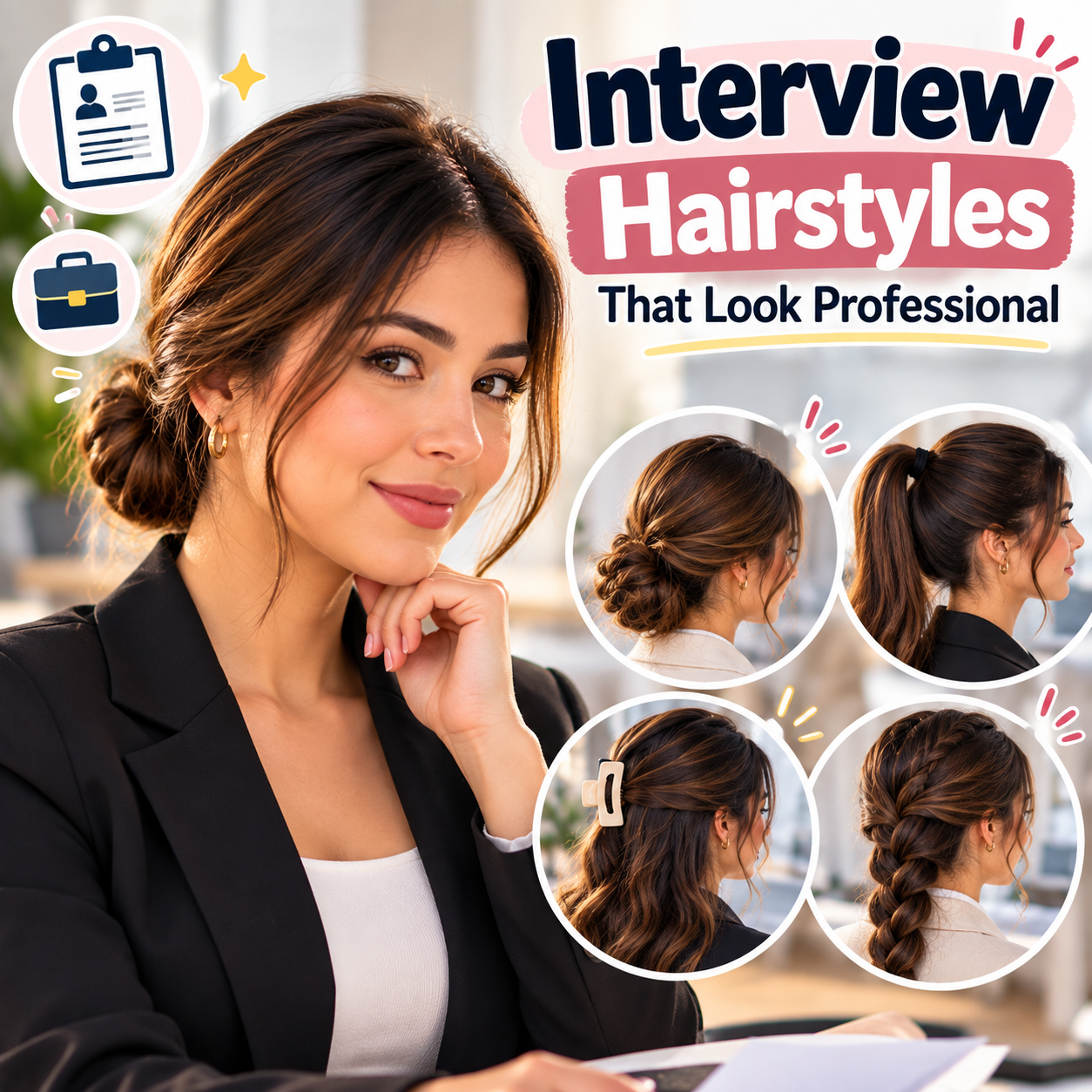
Interview Hairstyles That Look Professional (for Any Hair Type)
Interview hair usually goes wrong in small ways. A ponytail slides down, curls puff up in the rain, or one strand keeps falling across your face. The best interview hairstyles that look professional share a few traits: they stay neat, keep your face visible, and feel comfortable enough that you can stop thinking about your hair.
No hairstyle decides an interview, and what feels appropriate varies by industry, company, role, and format. This guide gives you nine styles with steps and rough timing, a table that matches styles to hair types, advice for video calls, and a simple prep plan.

What Makes a Hairstyle Look Professional for an Interview?
Four simple tests cover most situations:
- Clean and neat. Ends are smooth, flyaways are controlled, and the front section sits where you put it.
- Face visible. Hair doesn’t cover your eyes or need tucking every few minutes.
- Stays put. You shouldn’t have to adjust it mid-conversation.
- Comfortable. Nothing pulls, itches, or digs in.
Up or down? Both can work. A style that passes the four tests matters more than the choice between them.
Professional Is About Care, Not One Look
Career guidance supports this. One university career center advises that hair be clean and styled in a way that makes you feel confident. It adds that creative fields often welcome more personal style as long as it stays polished and work-appropriate, and that going a little more formal is the safer choice when you’re unsure.
Natural texture, curls, coils, braids, twists, and locs are all professional options when they’re kept neat. Some US states and cities have laws that protect natural hair texture and protective styles at work, though protections vary by location. Expectations still differ by industry, company culture, role, and interview format, so use this guide as a menu of options, not a rulebook.
9 Interview Hairstyles That Look Professional, With Steps
The times below are rough estimates. They change with hair length, texture, and practice. Try your chosen style once before interview day.
1. Sleek Low Ponytail
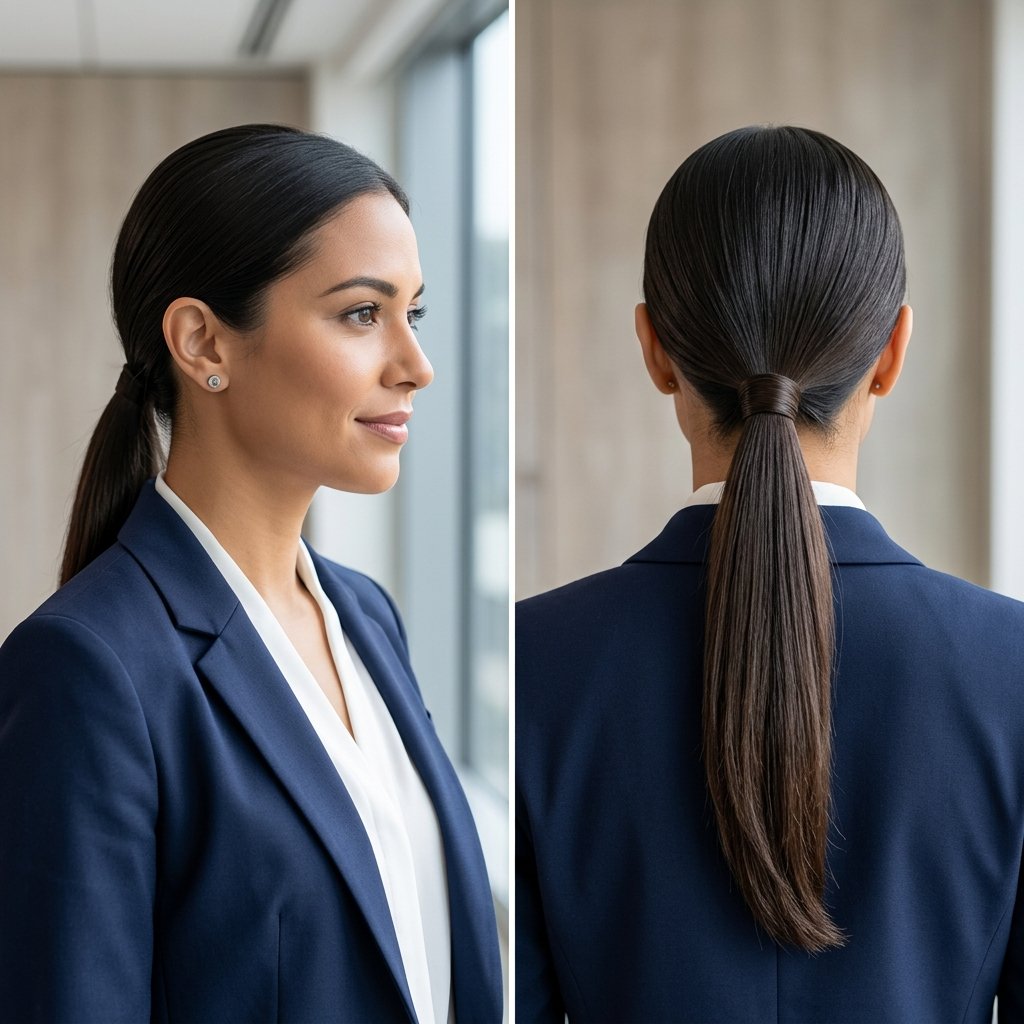
- Best for: shoulder-length or longer hair, from straight to wavy, plus curly or coily hair styled smooth with a gel or cream
- Time: about 5–8 minutes
- Difficulty: easy
A low ponytail keeps hair off your face and pairs well with a blazer or collared shirt. It’s a practical choice for a more structured workplace.
- Brush or comb your hair in the direction the ponytail will sit. Smooth flyaways with a little cream, gel, or light-hold spray.
- Gather the hair at the nape of your neck.
- Secure it with a snag-free elastic.
- Wrap a thin strand around the elastic and pin the end underneath.
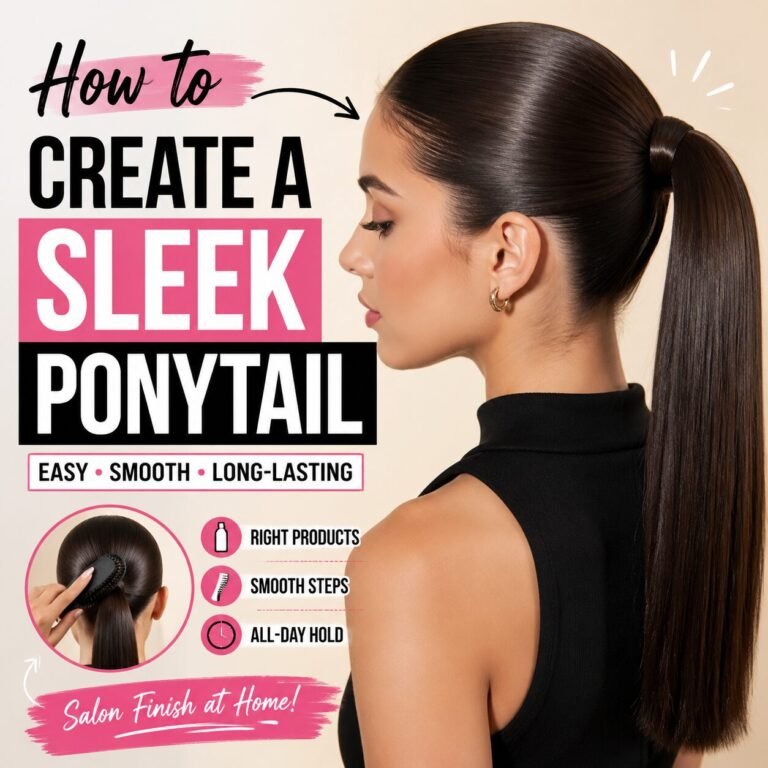
Keep it snug, not tight. It works with glasses, and a headset band will sit above it on a video call. For more detail, see how to create a sleek ponytail. Limit: very fine hair can look thin in a ponytail, so add a little texture at the ends.
2. Low Bun, Chignon, or French Twist
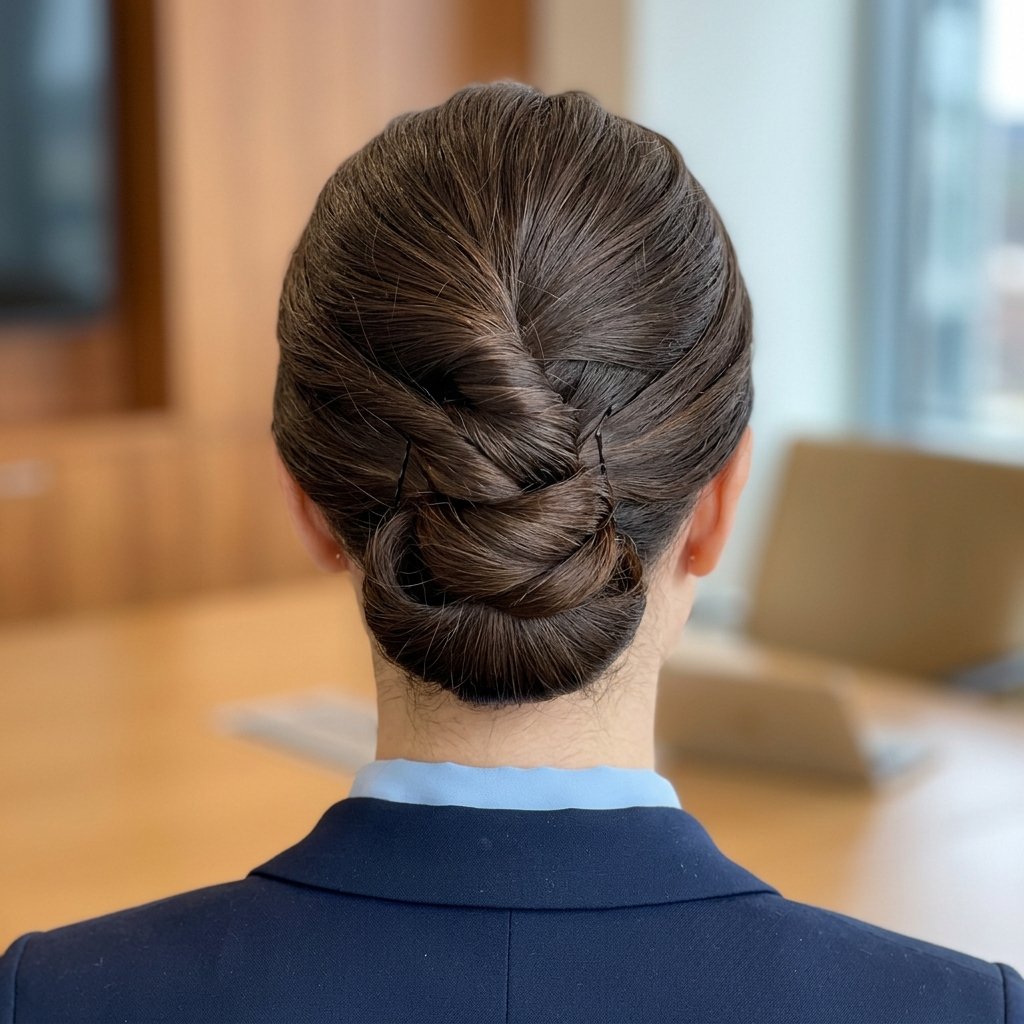
- Best for: medium to long hair of any texture
- Time: about 8–12 minutes
- Difficulty: easy to medium
A low bun gives a clean, structured outline and shows off your face and earrings. A French twist is a more formal variation.
- Smooth your hair and gather it low at the back of your head.
- For a bun, twist the ponytail and wrap it around its base. For a French twist, roll the hair upward along the back of your head.
- Pin in crossed pairs so the pins hold each other.
- Smooth the hairline with a little gel or edge control.
Check the back view with a hand mirror or your phone camera. A very low bun can bump a headrest or headset band, so test it. If your hair is thick and slips, use two elastics and larger pins. If it’s fine, a little texturizing spray gives pins something to grip.
3. Half-Up Style
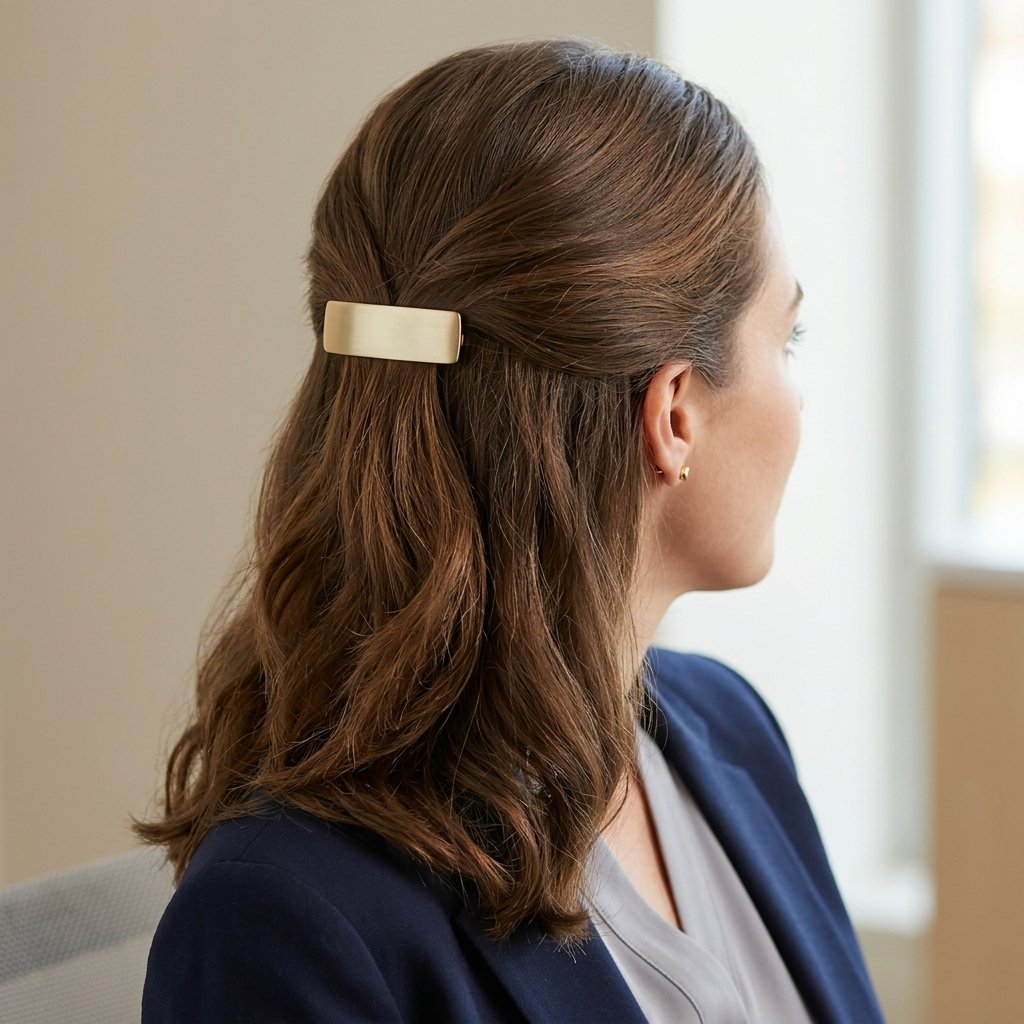
- Best for: medium to long straight, wavy, or curly hair
- Time: about 5 minutes
- Difficulty: easy
This keeps hair off your face while letting the rest fall naturally. It’s a good middle ground if you’d rather wear your hair down.
- Section the hair from your temples to the crown.
- Smooth it back, or twist it once for a bit of shape.
- Secure it with a plain barrette or elastic in a neutral color.
- Check that no strands fall forward.
A clean claw-clip twist can suit a casual or creative workplace. A loose, undone version can look unfinished in more formal settings. Limit: a headset band may press on the knot, and you may need a quick check before you walk in.
4. Low Braid or French Braid
- Best for: medium to long hair; works across textures when the hair is detangled and prepped
- Time: about 10–15 minutes
- Difficulty: easy for a low braid, medium for a French braid
A braid is a good choice for hair that won’t stay put in a ponytail. It stays secure through a commute and a long day.
- Detangle your hair and smooth it with a little cream or gel.
- Braid from the nape for a low braid, or start higher and work down for a French braid.
- Secure the end and tuck any loose ends.
- Smooth the front so no pieces stick out.
Don’t braid tightly at the hairline. Flat twists are an alternative for textured hair. On video, a braid that swings over one shoulder can move into the frame, so keep it behind your shoulder or pin it.
5. Smooth Waves or a Sleek Side-Parted Blowout
- Best for: shoulder-length and longer hair
- Time: about 15–25 minutes with heat
- Difficulty: medium
Wearing your hair down can look polished when it’s smooth and controlled. A deep side part and soft waves, or a smooth blowout, both work.
- Apply heat protectant to dry hair or damp hair, depending on the product.
- Blow-dry smooth with a brush, or curl loose waves and brush them out gently.
- Set a side part and pin one side back with a plain barrette if hair falls forward.
- Finish with a light spray for hold.
Limit: loose hair can fall into your face. If you tuck or touch your hair when you’re nervous, a half-up style may be more comfortable.
6. Bob or Lob

- Best for: any texture, with a cut shaped for that texture
- Time: about 5–10 minutes
- Difficulty: easy
A bob frames the face and takes little daily styling. Recent trends favor longer, lower bobs with softer ends, which also suit a professional look.
Get the cut a few days before the interview so it has time to settle. Curly and coily hair often looks best when a stylist experienced with curls shapes the cut. On the day, smooth it with a round brush or leave natural waves with a little cream. Pin the front if it swings forward. Bobs work with glasses and headsets.
7. Short Cuts: Pixie, Crop, Taper, or Textured Top
- Best for: short hair of any texture, on any gender
- Time: about 5 minutes
- Difficulty: easy
Short cuts are easy to keep neat and don’t conflict with glasses or headphones. A little matte paste or cream adds shape without spiky styling.
Tidy the neckline and edges a few days beforehand. Limit: a grown-out short cut loses its shape quickly, so plan a trim before the interview.
8. Defined Curls, Coils, Twist-Outs, and Puffs
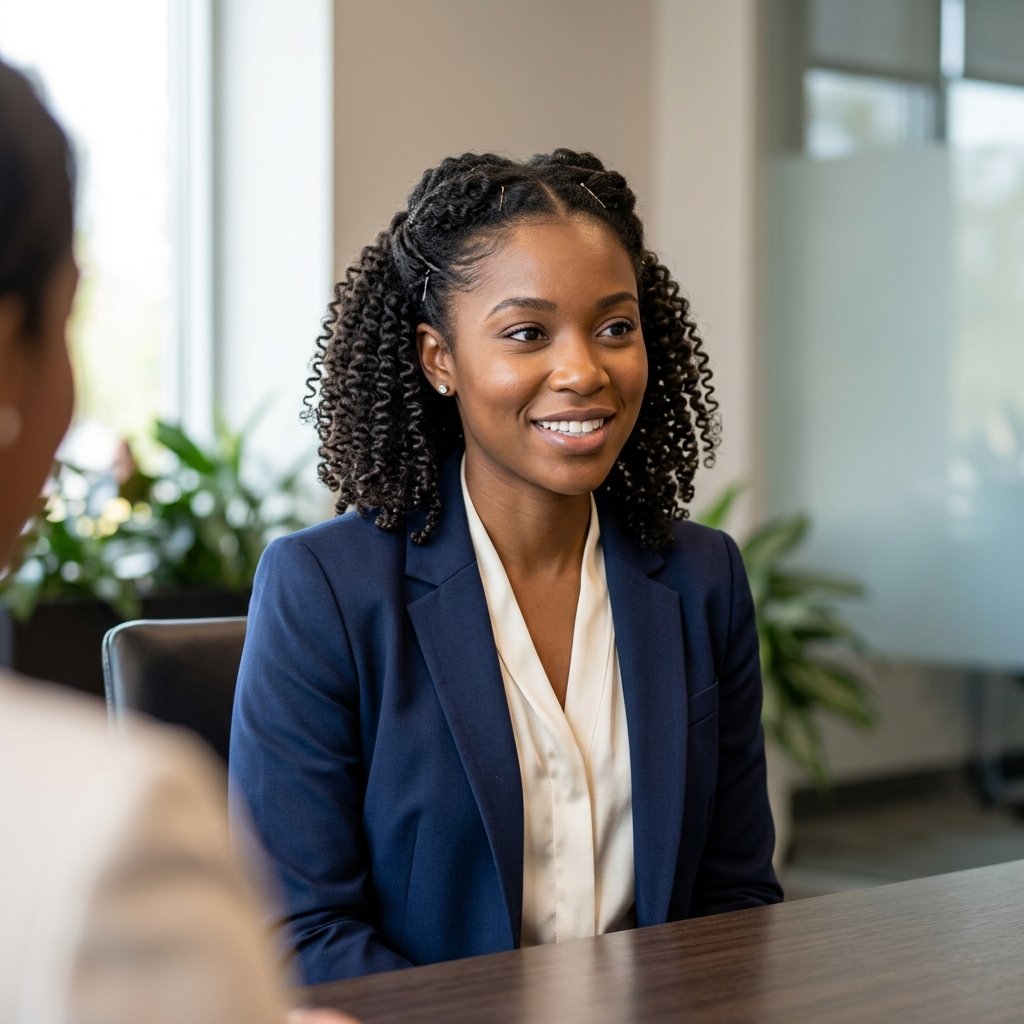
- Best for: medium to long curly and coily hair
- Time: about 20–40 minutes, often prepped the night before
- Difficulty: medium
Natural texture is a professional option when it’s defined and kept neat. Many people prep these styles the day before so there’s less to do on the morning of the interview.
- Moisturize and define with a leave-in conditioner and a gel or cream.
- Let the hair dry fully.
- For a twist-out or braid-out, separate the sections gently.
- Keep the front off your eyes with a clip, a pin, or a plain headband.
- For a puff, smooth the edges first.
Limit: large volume can press against a headset, so test it. Humidity can change the shape, so plan for the weather.
9. Neat Braids, Twists, and Locs

- Best for: protective styles and locs that are already installed
- Time: done in advance
- Difficulty: depends on the style
These styles are professional when they’re tidy. On interview day, smooth your edges, tidy new growth, and wear them down or pulled loosely into a low ponytail or bun.
Keep any install comfortable and not tight at the scalp. Some workplaces have their own grooming rules, so ask if you’re unsure.
Best Interview Hairstyles by Hair Type
| Hair type | Styles that often work | One prep move |
|---|---|---|
| Straight | Low ponytail, low bun, bob, side part | A light smoothing spray for static and flyaways |
| Wavy | Half-up, low braid, soft waves, lob | A light cream to define waves without weighing them down |
| Curly | Defined curls, half-up, low bun, curly bob | Style the night before so the hair dries fully |
| Coily or textured | Twist-out, braid-out, puff, low bun, braids or twists | Moisturize, define, and smooth the edges |
| Fine or thin | Bob, low ponytail with texture, half-up | Lightweight products and some root lift |
| Thick | Low braid, low bun, bob | Work in sections and use strong pins |
Fine or Thin Hair
Lightweight products and a little root lift help fine hair look fuller. A blunt-ended bob can look thicker than a wispy one. For more ideas, browse these hairstyles for thin hair.
Thick or Dense Hair
Thick hair can slip out of a single elastic or pull the style loose. Work in sections, use two elastics, and use larger pins. Heavy hair also adds weight, so keep any style comfortable.
Hairstyles for Virtual Interviews
What the Camera Shows
On a video call, people mostly see your head and shoulders, so hair near your face matters most. Flyaways can catch the light, and hair that keeps falling forward is a distraction. Do a test call, watch the screen, and fix whatever stands out.
Headphones, Glasses, and Your Hair
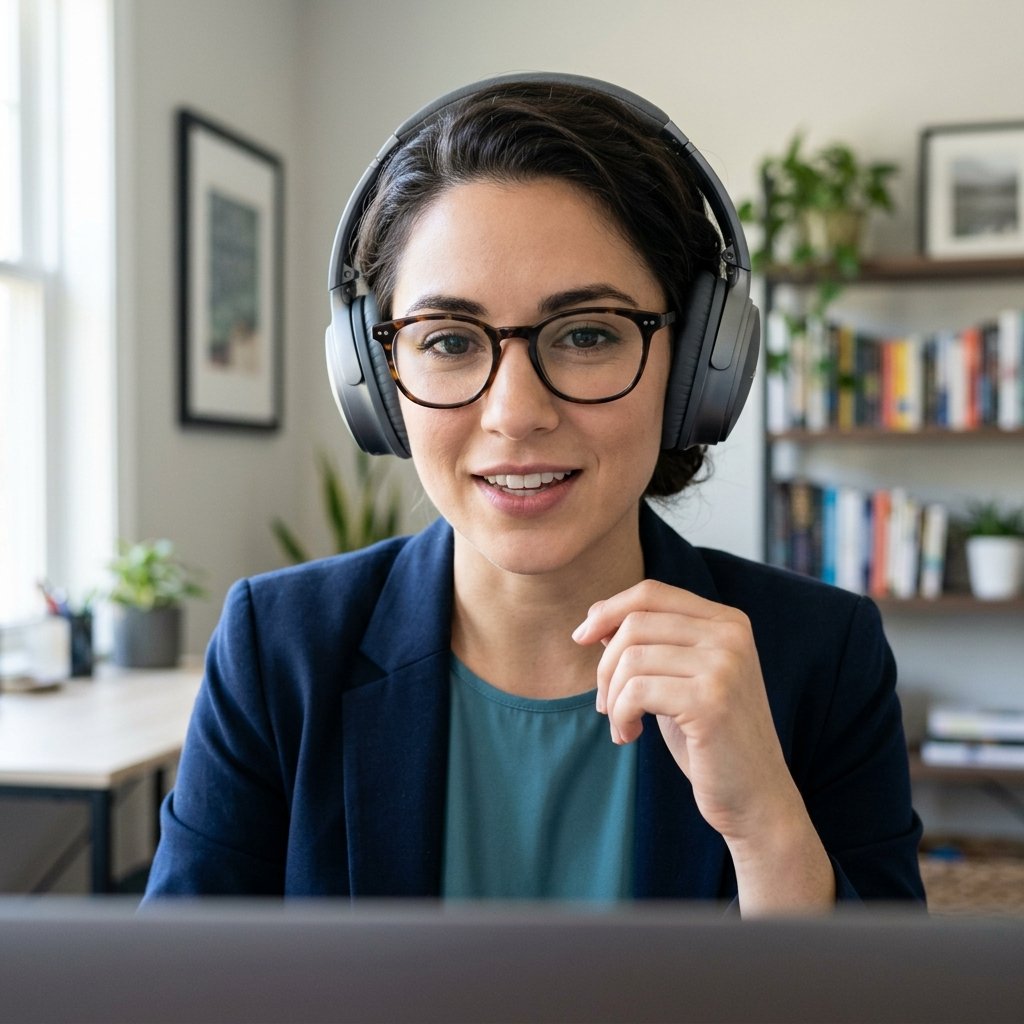
Indeed’s virtual interview guide recommends headphones or earbuds with a microphone for clearer audio, and a camera at eye level or slightly above. A simple, low-profile set is easiest to style around.
- Place the headset band over your crown and check that a bun or knot isn’t in its way.
- Tuck hair behind your ears so strands don’t sit inside your glasses or catch on the arms.
- Check how your hair looks with the headset on, not just without it.
Best Picks and What to Skip
Low ponytails, low braids, half-up styles, bobs, short cuts, and defined curls with the front pinned back all work well on camera. Be cautious with tall top knots, large puffs you haven’t tested against a headset, and loose hair that needs tucking.
Match Your Hairstyle to the Workplace and Interview Format
| Setting | What to prioritize | Styles that often fit |
|---|---|---|
| Corporate, finance, or law | A structured look with few flyaways | Low bun, sleek low ponytail, bob, smooth waves |
| Healthcare, education, or childcare | Practical, secure hair; some roles have safety or hygiene rules, so ask | Low bun, braid, ponytail |
| Customer-facing retail or hospitality | Neat and comfortable when moving | Low ponytail, braid, half-up |
| Creative industries or startups | More personal style, still tidy | Half-up, defined curls, textured bob, clean claw-clip twist |
| Remote or video interviews | Visible face, headset-friendly | See the virtual section above |
| Long, multi-round interview day | Hold and low maintenance | Braid, low bun, short cut |
If You’re Not Sure What the Dress Code Is
Look at the company’s website and social media photos, or ask the recruiter what’s typical. The same university guidance suggests going slightly more formal when in doubt. Wearing a polished version of your natural style is usually a safe middle path.
Quick Interview Hairstyles and Last-Minute Fixes
Under 10 Minutes
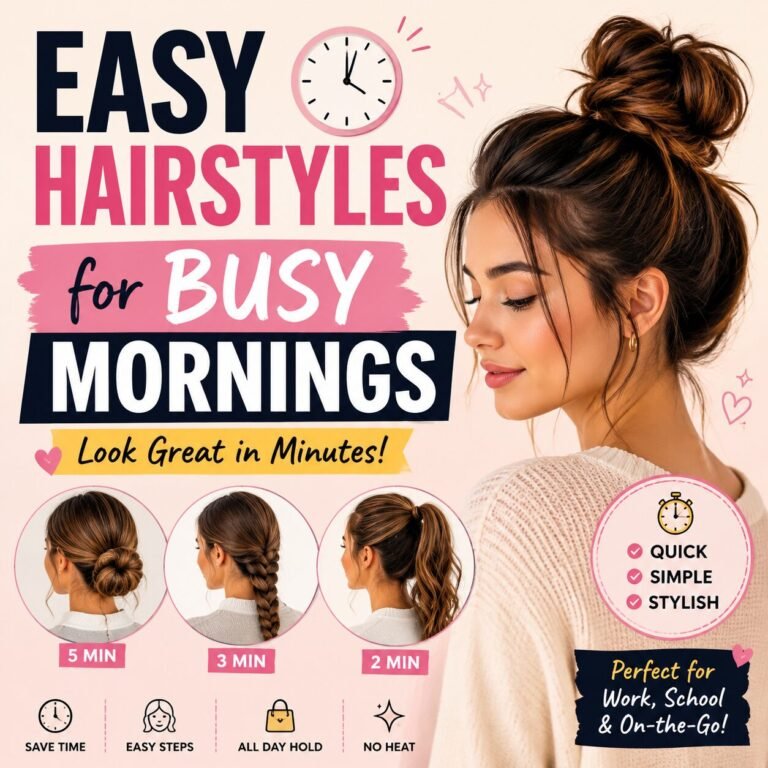
If your morning is tight, these easy hairstyles for busy mornings offer more fast options. These are some that fit the brief:
| Style | Approximate time | What you need |
|---|---|---|
| Low ponytail | About 5 minutes | Brush, elastic, light gel or spray |
| Half-up | About 5 minutes | Barrette or elastic |
| Short-cut styling | About 5 minutes | Small amount of paste or cream |
| Low bun | About 8–10 minutes | Elastic, pins |
| Smoothed bob | About 10 minutes | Brush, heat protectant if using heat |
Most of these may need a quick check in a mirror before you walk in.
Fixes for Common Problems
- Flyaways or static: smooth with a small amount of cream or leave-in conditioner.
- Humidity or frizz: tie hair back and use a smoothing cream or gel.
- Cold, dry weather or hat hair: comb and re-smooth in a restroom mirror. These winter hairstyles that reduce frizz can help in cold weather.
- Wind: pack a spare elastic and a few pins.
- A slipping bun: take it down and re-pin in crossed pairs.
How to Prepare Your Hair Before the Interview
A Few Days Before
Get any haircut a few days ahead so it can settle. Do a trial run of your chosen style while wearing your interview outfit. For a video interview, test it on camera.
The Night Before
Prep based on your texture. Set a twist-out or braid-out, and protect your hair overnight with a satin bonnet or pillowcase if that suits your routine. Pack your hair kit.
The Morning Of
- Style your hair when it’s fully dry.
- Smooth the front and hairline.
- Secure the style with pins or an elastic.
- Check the side and back using a second mirror or your phone camera.
- Leave a small time buffer for fixes.
A Small Hair Kit
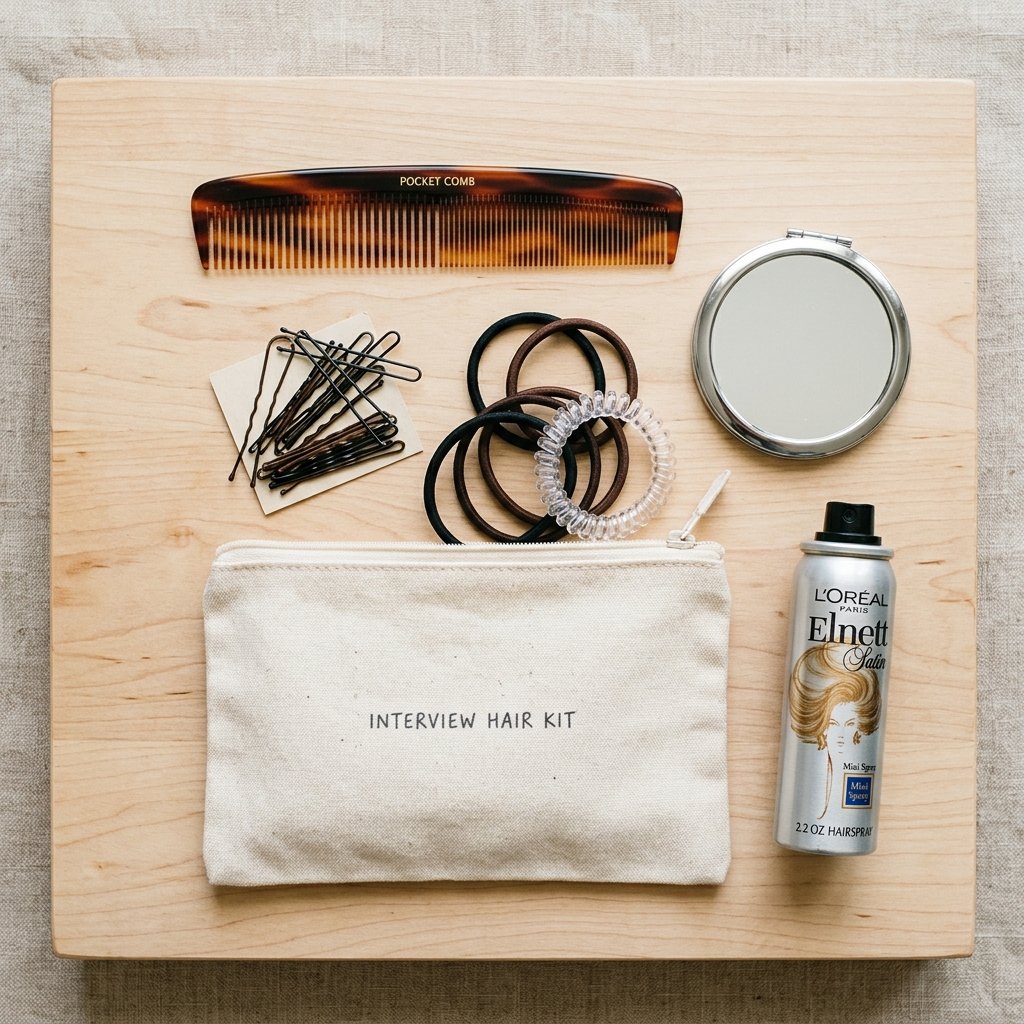
- A comb or brush
- Bobby pins
- Spare elastics
- Travel-size spray or gel
- A small mirror
Keep It Neat Without Pulling Too Tight
Dermatologists at the American Academy of Dermatology say tightly pulled ponytails and updos can contribute to hair loss, and that a style that hurts is too tight. Keep styles snug, not painful, and loosen them if you feel strain, especially at the hairline.
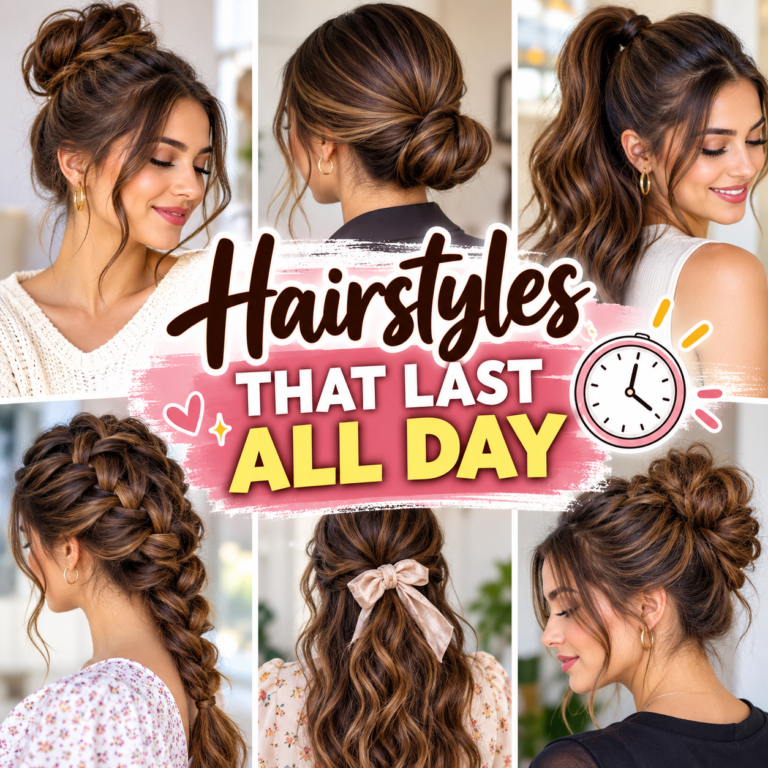
Hold comes from good prep and smart pinning, not from pulling harder. For a long interview day, these hairstyles that last all day are worth a look.
Common Interview Hairstyle Mistakes
- Trying a new style that morning. Practice it once beforehand.
- Using too much product. Heavy product can look stiff or leave visible buildup, so use a little at a time.
- Constantly touching your hair. Pick a style that doesn’t invite it.
- Letting hair cover your face. Pin or tie back anything that falls forward.
- Wearing too many or flashy accessories. One plain barrette or elastic is enough.
- Choosing a style that’s too tight. Discomfort is distracting, and it can strain your scalp.
- Ignoring the weather. Plan for humidity, rain, wind, or cold.
- Forgetting the headset or glasses. Test your style with them on.
- Skipping the back view. Check it with a second mirror.
Which 2026 Hair Trends Work for Interviews?
Trend coverage this year leans toward soft shapes and movement instead of rigid styling. Most of it adapts well for interviews.
| Trend | Interview version | Skip if |
|---|---|---|
| Longer, lower bobs | Tidy ends and a smooth side part | The cut falls forward and you can’t pin it |
| Slick low bun | Works as it is, with a clean part | The style feels tight |
| Lived-in, undone waves | Smooth, brushed-out waves with tidy edges | Humidity makes your hair frizz |
| Soft layers and curtain bangs | Pin bangs off the eyes | Bangs fall into your eyes on camera |
| Big, voluminous blowouts | Keep the volume controlled | You’ll wear a headset |
| Claw clips | A simple clip twist in a casual or creative setting | The workplace is formal |
Classic styles remain the safest default.
Interview Hairstyle FAQs
Should you wear your hair up or down for an interview?
Either can work. What matters is that your hair is neat, your face is visible, and you’re comfortable. If you tend to touch or tuck your hair, a half-up style is a good middle option.
Is a ponytail or bun professional for an interview?
Yes, when it’s smooth and secure. Low versions often look more structured, but a polished high one can suit some workplaces too. Keep it snug without pulling hard.
Can you wear natural curly or coily hair to an interview?
Yes. Focus on definition, neatness, and keeping the front off your eyes. Expectations vary by workplace, but natural texture is a professional choice.
What hairstyle is best for a virtual interview?
A style that keeps your face visible, controls flyaways, and works with a headset. Low ponytails, braids, half-up styles, bobs, and short cuts are good choices. Test your look on camera first.
Should you get a haircut or wash your hair before an interview?
Get any haircut a few days ahead so it settles. Wash timing depends on your hair type, since some hair styles better a day after washing and some on the day. Try your routine before the interview.
Can you wear a claw clip, headband, or barrette?
Plain, neutral accessories usually work best. Avoid large, shiny, or many accessories. A claw clip depends on the workplace: it may suit a casual or creative setting more than a formal one.
How do you keep your hair neat all day or between interview rounds?
Prep well, pin securely, and carry a small kit with a comb, pins, and a spare elastic. Check yourself in a mirror before each round.
Final Checklist Before You Walk In
- My face is visible and nothing falls into my eyes.
- The style is comfortable and not pulling.
- I’ve tried it once before today.
- I’ve checked the back and sides.
- My kit is packed.
The right choice depends on your hair type, the workplace, and the format. Pick a style you can do well, keep it neat, and let your preparation do the work.