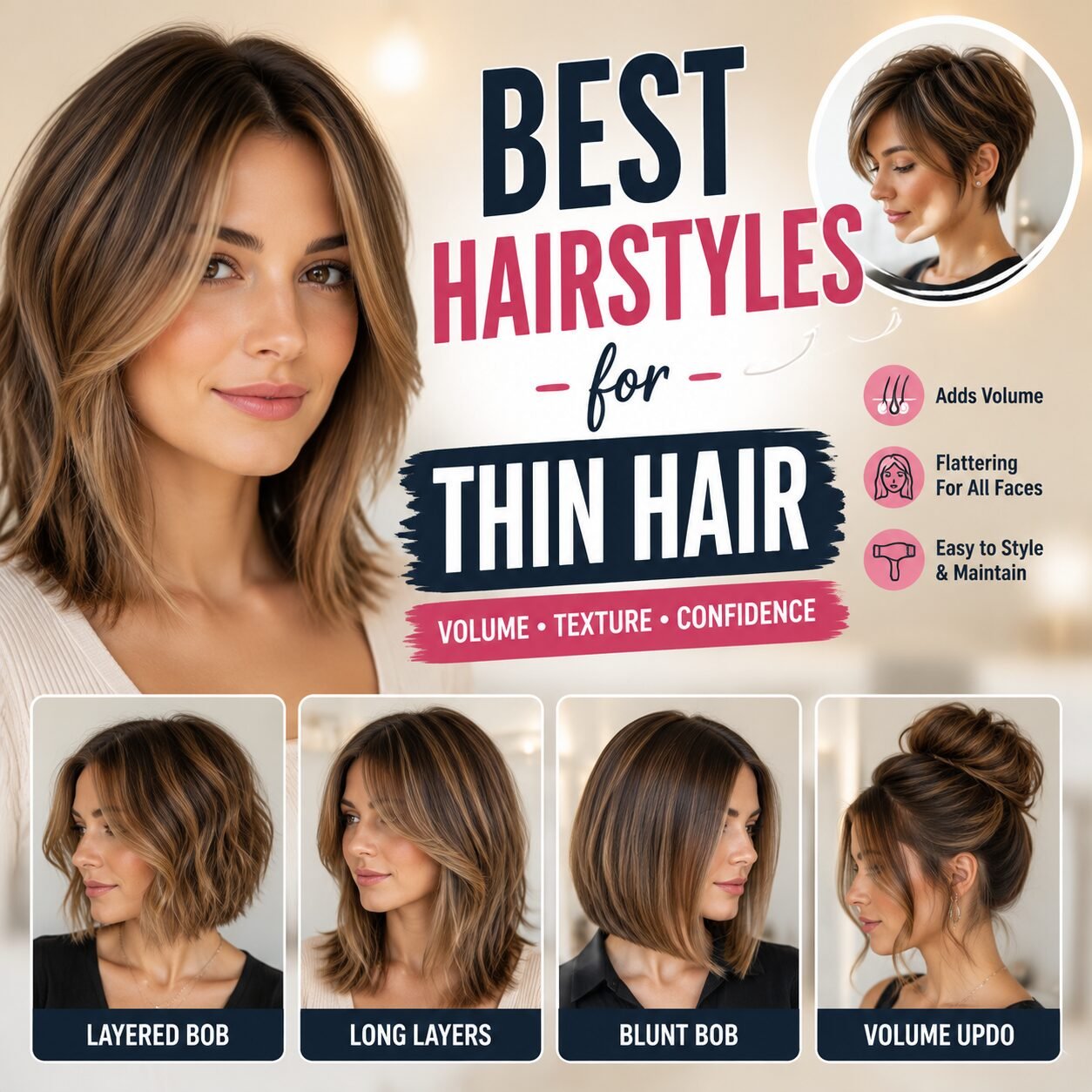
Best Hairstyles for Thin Hair in 2026
If you’ve spent years chasing volume that disappears by lunchtime, you already know the frustration of thin hair. The good news is that the best hairstyles for thin hair in 2026 aren’t about piling on more product or avoiding the salon chair. They’re about working with your hair’s real structure — its density, its texture, and its natural fall — instead of fighting it.
This guide walks through the cuts, colors, and styling habits that stylists actually recommend for thin hair, organized by length, texture, and face shape, so you can walk into your next appointment knowing exactly what to ask for.
Who this guide is for: Anyone whose hair feels flat by midday, whose ponytail feels thinner than it used to, or who has been told “just add layers” without much explanation of why. This is written for real hair, not a photo gallery.
Is Your Hair Thin, Fine, or Thinning? (Why the Difference Matters)
Before picking a haircut, it helps to know what you’re actually working with. Most articles use “thin” and “fine” as if they mean the same thing. They don’t, and mixing them up is one of the easiest ways to end up with a cut that makes your hair look worse instead of better.
Thin hair is about density
Thin hair refers to how many individual strands grow on your scalp. If you can see patches of scalp through your part, or your ponytail feels noticeably slim in your hand, you likely have lower density. This is mostly genetic, and it’s not the same thing as hair loss.
Fine hair is about strand diameter
Fine hair describes the width of each individual strand, not how many strands you have. You can actually have a lot of fine hair — a dense head of delicate strands that still falls flat because each one is too thin to hold shape on its own.
Thinning hair is a change over time
Thinning hair means you’re losing density you used to have, often gradually. It’s worth mentioning to a dermatologist if it happens quickly or comes with noticeable shedding, since that’s a different conversation than styling for hair that’s simply always been light on volume.
A simple two-part self-test
You don’t need a salon consultation to figure out which category you fall into. Try this at home:
- Diameter test: Pull one strand of hair and roll it gently between your thumb and finger. If you can barely feel it, your hair is fine. If it feels noticeably thick, it’s coarse. Anything in between is medium.
- Density test: Gather your hair into a ponytail and wrap your fingers around the base. A ponytail base thinner than a pencil generally points to lower density. Thicker than a marker generally points to higher density.
Why this matters for your haircut: A stylist who treats fine, dense hair the same as thin, coarse hair will often recommend the wrong thing. Fine hair usually needs weight removed to avoid looking limp, while thin (low-density) hair often needs weight kept so it doesn’t look sparse. Telling your stylist both results from this test, not just “my hair is thin,” leads to a much better consultation.
What Makes a Haircut Actually Look Fuller
Once you know what you’re working with, the next question is why certain cuts work and others don’t. A handful of principles show up again and again in professional recommendations for 2026.
Structure matters more than sheer length
The biggest shift in thinking around thin hair styling is less about a dramatic change and more about intentional shape. A cut with a clear, structured silhouette reads as fuller than a shapeless one, regardless of length. This is why a well-cut shoulder-length lob can look thicker than the same hair grown out past the shoulders with no defined shape.
Blunt perimeters concentrate weight where you need it
One of the clearest trends for thin hair is a return to cleaner, blunter ends rather than heavily feathered ones. Cutting hair at one length, rather than layering all the way through, keeps the visual weight at the bottom of the cut instead of thinning it out. That’s why a classic blunt bob or lob so often outperforms a heavily layered version on fine or thin hair.
Layering isn’t the enemy — bad layering is
For years, the advice was to avoid layers altogether. That advice oversimplifies things. Well-placed layers, especially subtle internal layers or face-framing pieces, can add movement and the appearance of body. The problem isn’t layers themselves; it’s cutting too many of them, too aggressively, all the way through the length, which removes the density thin hair can’t spare.
| Layering approach | Effect on thin hair |
|---|---|
| No layers, one blunt length | Maximizes visual thickness, can look heavy or flat without shape |
| Light internal layers | Adds movement without losing perimeter weight |
| Face-framing pieces only | Softens the face, keeps overall density intact |
| Heavy, all-over layering | Removes weight throughout, often makes hair look thinner |
| Razor-cut, feathered ends | Creates wispy, see-through ends — usually the least flattering choice for thin hair |
Best Short Hairstyles for Thin Hair
Short hair is often the most forgiving length for thin or fine hair, mainly because there’s less length for gravity to pull down and flatten.
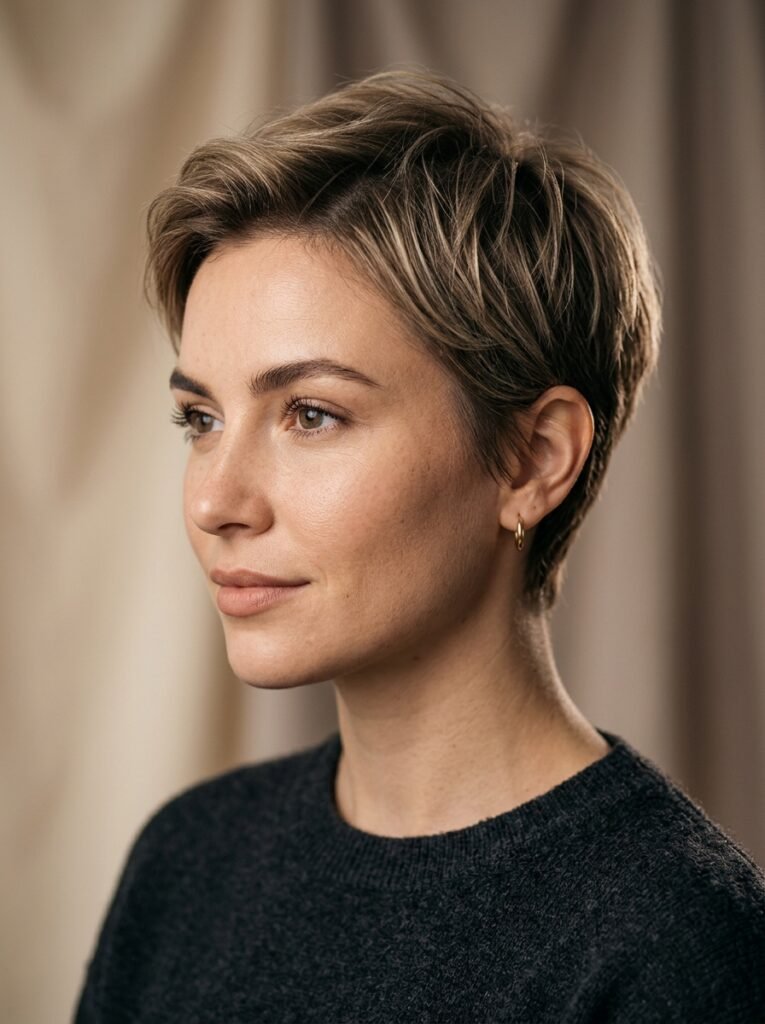
Textured Pixie With Crown Volume
Asking for a soft, textured pixie with a little extra length left at the crown gives you somewhere to build lift, while keeping the sides and back close enough that they don’t look sparse. This works especially well if your hair has any natural wave, since the texture does some of the volumizing work for you.
Soft, Piecey Pixie With Side-Swept Fringe
A slightly longer, piecey version of the pixie softens the face and gives you styling flexibility — you can push it back for a polished look or let the fringe fall forward for something more casual. The piecey ends also help disguise any thin patches near the hairline.
Blunt Bob (Chin to Shoulder Length)
A bob cut without heavy layering, ending anywhere from the chin to just above the shoulders, is one of the most consistently recommended shapes for thin hair. The uniform length keeps the ends looking dense, and the shorter overall length reduces the drag that makes long thin hair go flat.
Best Medium-Length Hairstyles for Thin Hair
Medium length is a sweet spot for a lot of people with thin hair — long enough for styling versatility, short enough to avoid the flattening effect of extra length.
Blunt Lob
A long bob cut at one length, without heavy layering, is one of the most repeated stylist recommendations for thin hair in 2026. The blunt ends keep hair looking thick and intentional rather than wispy.
Asymmetrical Bob
Cutting one side slightly longer than the other creates a subtle diagonal line that draws the eye and reads as more voluminous, particularly around the face.
French Bob
A shorter, chin-grazing bob with blunt ends and often a soft fringe. The shorter length prevents the ends from thinning out visually, while the blunt line keeps the whole shape looking dense.
Layered Lob With Face-Framing Pieces
If you want some movement without losing overall density, ask your stylist for layering concentrated only around the face rather than throughout the whole cut. This gives you softness near your features while keeping the back and crown weight intact.
Best Long Hairstyles for Thin Hair
Long hair is genuinely the hardest length to style well when you have thin hair, and it’s worth being upfront about that rather than pretending every length works equally.
Why Long Thin Hair Is the Hardest Length to Pull Off
The longer hair grows, the more its own weight pulls it flat against the scalp. Simply adding a few layers near the crown to compensate often backfires — it can create an awkward disconnect between the shorter layers and the long, blunt ends, and blending everything smoothly tends to remove even more density.
Long Layers With Face-Framing Pieces
If you want to keep length, ask for layers concentrated around the face rather than throughout the interior of the cut. This adds movement exactly where it’s most visible without thinning out the back.
Soft Shag for Long Hair
A shag haircut uses feathered layers throughout to create the illusion of texture and volume, which can work well on long thin hair — especially if you’re willing to style with some texture rather than wearing it stick-straight.
Curls and Waves Do More Work Than a Flat Iron
Long, straight, thin hair tends to look thinner than it is, simply because straight strands lie completely flat against each other. Waves and curls create separation between strands, which reads as more volume. If you’re keeping length, building a loose curl or wave into your routine will usually do more for fullness than any product alone.
Best Hairstyles for Thin Hair by Texture
Most thin-hair guides default to straight hair examples. Texture changes the calculation quite a bit, so it’s worth addressing separately.
Straight Thin Hair
Straight strands show flatness the most, since there’s no natural bend to create separation. Blunt cuts, root-lifting styling, and a side or deep part tend to help the most here.
Wavy Thin Hair
Waves already introduce some natural volume. The goal with wavy thin hair is usually to protect and enhance that texture rather than smooth it away, since heat styling into straight strands often flattens what little natural lift you have.
Curly Thin Hair
Curls can create real volume on their own, but curly hair can still look thin if the curl pattern is loose or the density is genuinely low. A layered shape that lets curls stack on top of each other, rather than a one-length cut that weighs the curls down, tends to work best.
Best Haircuts for Thin Hair by Face Shape
Face shape and hair density interact more than people expect — a cut that flatters a round face on someone with thick hair might need adjusting for someone with thin hair, since there’s less bulk to create the same visual balance.
| Face shape | What thin hair needs | Cuts that tend to work |
|---|---|---|
| Round | Length and a bit of height at the crown to elongate | Long bob, side part, face-framing layers |
| Oval | Most flexibility — few restrictions | Blunt bob, curtain bangs, lob |
| Square | Softness around the jawline | Layered lob, soft waves, side-swept fringe |
| Heart-shaped | Width balance at the jaw, not just the crown | Chin-length bob, side-swept bangs |
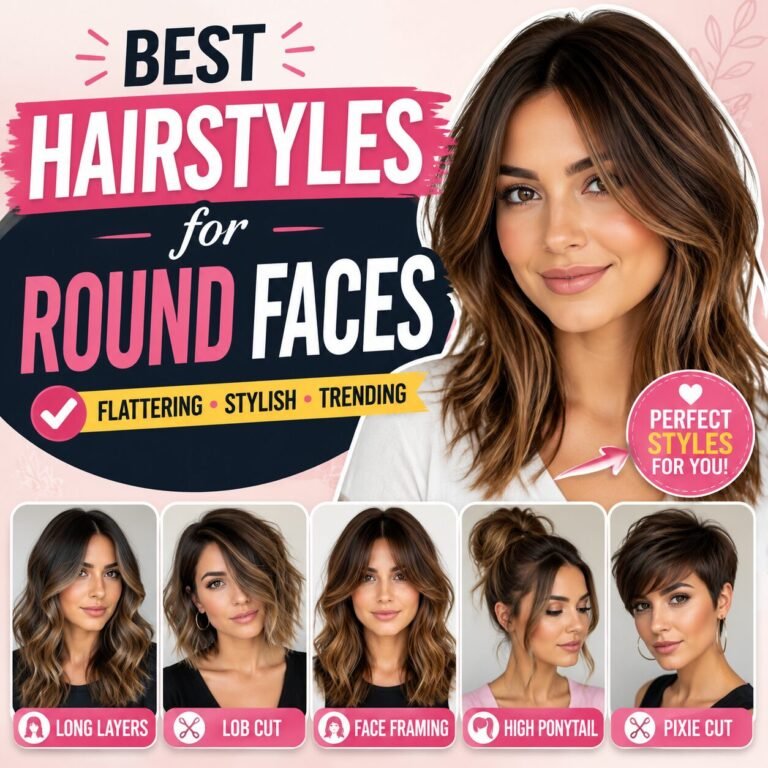
If you’re not sure which category fits you, our guide to the best hairstyles for round faces walks through how to identify your shape and adjust from there, which is a useful starting point before you layer thin-hair considerations on top.
Bangs and Fringe Styles That Work for Thin Hair
Bangs can genuinely help thin hair look fuller, but the wrong bang style can also do the opposite by drawing attention to sparse areas.
Curtain Bangs
Soft, center-parted bangs that blend into the rest of the cut are one of the most flattering options for thin hair, since they add softness around the face without requiring a lot of hair to look intentional.
Wispy Side Bangs
A lighter, side-swept fringe adds dimension without the commitment of a full bang, and it works even on longer hair.
Styles to Avoid: Heavy Blunt Fringe and Micro Bangs
Full, blunt, or very short “baby” bangs need a lot of density to look deliberate rather than sparse. On thin hair, they can end up looking patchy at the hairline instead of polished.
Color Techniques That Make Thin Hair Look Thicker
Color placement is one of the most underused tools for creating the appearance of fullness, and it works alongside your cut rather than replacing it.
Babylights and Micro-Highlights
Very fine, closely placed highlights mimic the subtle color variation hair naturally gets from the sun. Because the contrast is soft rather than harsh, the eye reads the color variation as added texture and depth, which translates into an illusion of thicker hair.
Shadow Roots
A soft, slightly deeper shade blended at the root creates gentle depth and makes the mid-lengths and ends look fuller by comparison, without the maintenance of a hard color line.
Lived-In Balayage
Hand-painted color that’s concentrated on the lengths, rather than the roots, creates a soft gradient that adds dimension without exposing sparse areas near the scalp the way all-over lightening can.
Strategic Lowlights
If lightening isn’t what you want, adding a few subtly deeper pieces throughout can create the same kind of depth and contrast as highlights, just in the opposite direction.
What to Avoid
A single, flat, all-over color tends to look the most one-dimensional on thin hair, since there’s no variation to create the appearance of extra texture.
Styling Tips for Maximum Volume
Even the best haircut needs the right styling habits to look its best day to day.
Expert Tips
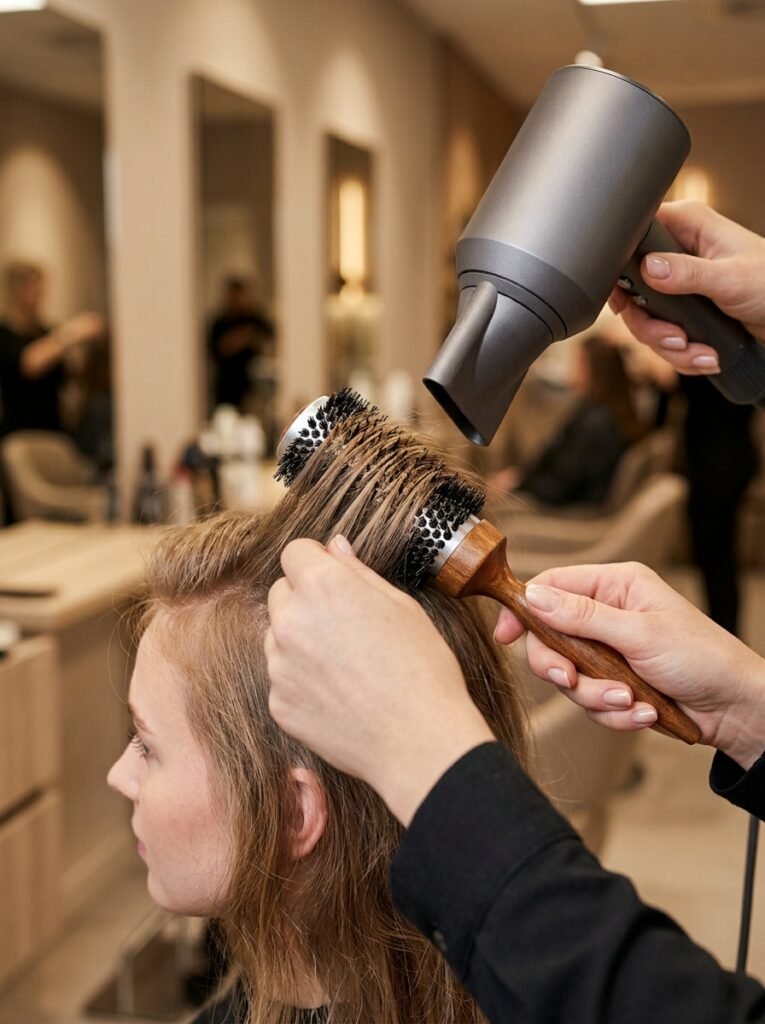
- Dry hair upside down for the first few minutes to lift the roots away from the scalp before you finish styling right-side up.
- Apply a root-lifting spray to damp hair before blow-drying, focused only at the roots.
- Use a round brush to lift sections at the crown while drying, rather than pulling hair completely straight.
- Curl or wave your hair rather than flat-ironing it — separation between strands reads as more volume than sleek, straight hair does.
- Finish with a light, flexible-hold hairspray rather than a stiff one, so the volume you built doesn’t collapse into a crunchy cap.
Product Layering: Less Is More
Fine and thin hair usually can’t handle multiple heavy products stacked on top of each other. One lightweight mousse or root lifter is often more effective than a mousse, a cream, and a serum combined, since heavy layering just weighs strands back down.
Nighttime Routine
How you sleep affects how your hair looks the next day. A loose, high bun or ponytail can help maintain root lift overnight, and a silk or satin pillowcase reduces the friction that flattens hair while you sleep.
Building a Simple Updo Without Losing Volume
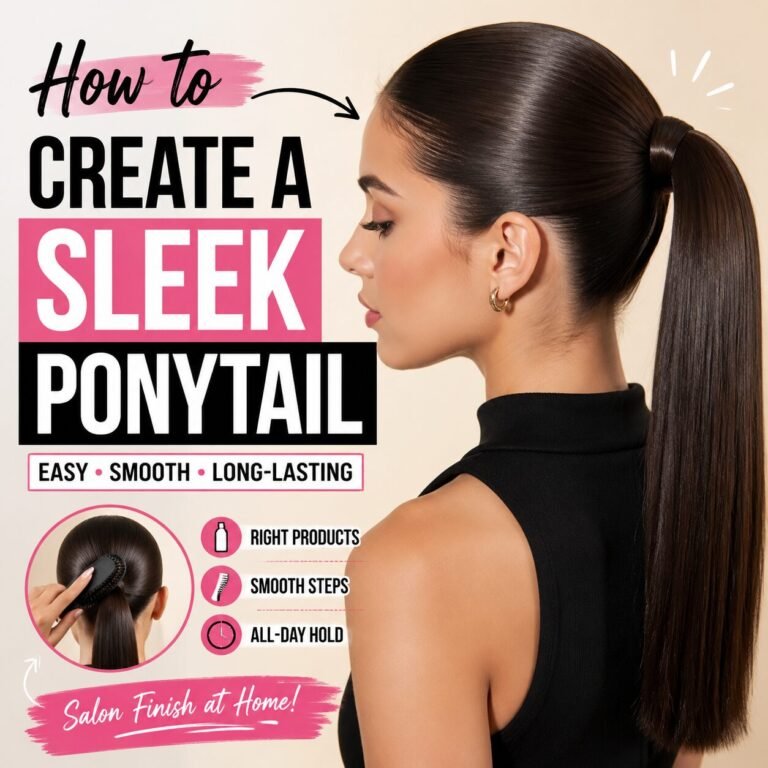
If you’re pulling your hair back, the way you do it matters. A sleek ponytail technique that starts with a little backcombing at the crown, rather than pulling hair completely tight and flat, will hold up much better on thin hair than a straightforward, tightly slicked style.
Common Mistakes That Make Thin Hair Look Even Thinner
Common Mistakes to Avoid
- Growing hair too long to compensate. It feels intuitive, but longer hair often makes thinness more noticeable, not less, since extra length adds weight that pulls hair flatter against the scalp.
- Overusing heavy conditioners or oils at the roots. These are meant for the ends. Applied at the scalp, they weigh hair down and cancel out any volume you built while styling.
- Product overload. Stacking too many styling products, even lightweight ones, adds up to the same flattening effect as one heavy product.
- Tight ponytails and slicked-back buns worn constantly. Beyond flattening the style, consistent tension at the same points can contribute to breakage over time. Softening the tension, or varying where you part and pull your hair, helps.
- Skipping regular trims. Uneven, damaged ends make hair look thinner than the same length with a clean, healthy edge.
How Often to Trim Thin Hair
Maintenance schedules aren’t one-size-fits-all, and thin or fine hair generally benefits from slightly more frequent trims than average hair.
| Hair type | Recommended trim frequency |
|---|---|
| Fine or thin, short styles (pixie, cropped bob) | Every 4–6 weeks |
| Fine or thin, medium length (lob, shoulder-length) | Every 6–8 weeks |
| Fine or thin, long length | Every 8–10 weeks, with attention to any split ends sooner |
Why Fine or Thin Hair Needs More Frequent Trims
Delicate strands show damage and shape loss faster than coarser hair. Split ends that travel up the shaft remove even more density over time, so staying ahead of them with regular trims helps preserve whatever fullness your cut is built to create. If you’re between appointments and notice fraying, a small “dusting” trim can often hold you over without sacrificing length.
Frequently Asked Questions
What is the best haircut for very thin hair?
Most stylists point toward shorter to medium lengths with minimal layering, like a blunt bob, textured pixie, or blunt lob. These shapes keep visual weight concentrated rather than spread thin across a lot of layers.
Should you cut layers into thin hair?
Yes, but selectively. Light internal layers or face-framing pieces can add movement without sacrificing overall density. Heavy, all-over layering tends to remove the weight thin hair needs to look full.
Do bangs help or hurt thin hair?
Soft, blended styles like curtain bangs or wispy side bangs generally help by adding dimension around the face. Heavy blunt fringes or micro bangs usually need more density than thin hair has to look intentional.
What’s the difference between fine hair and thin hair?
Fine hair refers to the diameter of each strand. Thin hair refers to how many strands you have overall, or density. You can have one without the other, and knowing which applies to you changes which cuts and products actually work.
How often should thin hair be trimmed?
Generally every 4 to 8 weeks, depending on length, since fine and thin hair tends to show split ends and lose its shape faster than coarser or thicker hair.
Does short hair really look thicker than long hair?
Often, yes. Shorter lengths carry less weight, which means less pull against the scalp and more apparent volume at the roots. That said, the right long-hair cut and styling routine can still look full — it just typically requires more upkeep.
Key Takeaways
- Figure out whether your hair is thin (low density), fine (thin strand diameter), or both, since the right haircut depends on which one you’re working with.
- Structure and blunt perimeters generally create more visual fullness than heavy, all-over layering.
- Shorter and medium lengths tend to be the most forgiving; long hair is achievable but needs more deliberate styling.
- Color placement, like babylights or shadow roots, can add the illusion of thickness alongside your cut.
- Simple styling habits — root lifters, upside-down drying, and lightweight products — matter as much as the haircut itself.
- Regular trims every 4 to 8 weeks help preserve the shape and density your stylist built in.
Conclusion
There isn’t a single best hairstyle for thin hair that works for everyone, but there is a reliable framework: understand your density and texture, choose a cut with real structure rather than excessive layering, and support it with color and styling habits that add rather than subtract volume. Bring the self-test results from earlier in this guide to your next consultation, and be specific with your stylist about what “thin” means for your hair. That one conversation tends to make more difference than any single product on the shelf.
Results will vary depending on your natural texture, density, and how closely you follow the styling and maintenance habits above — but with the right cut as a foundation, thin hair can hold shape, move well, and look genuinely full day to day.